
Interviews where you actually listen
A job interview, an annual review: you want to stay present, ask the follow-up question, dig into an answer. But someone will expect a report afterwards, the team or the file. So you take notes, and while you write, you stop listening.
What KISMO does
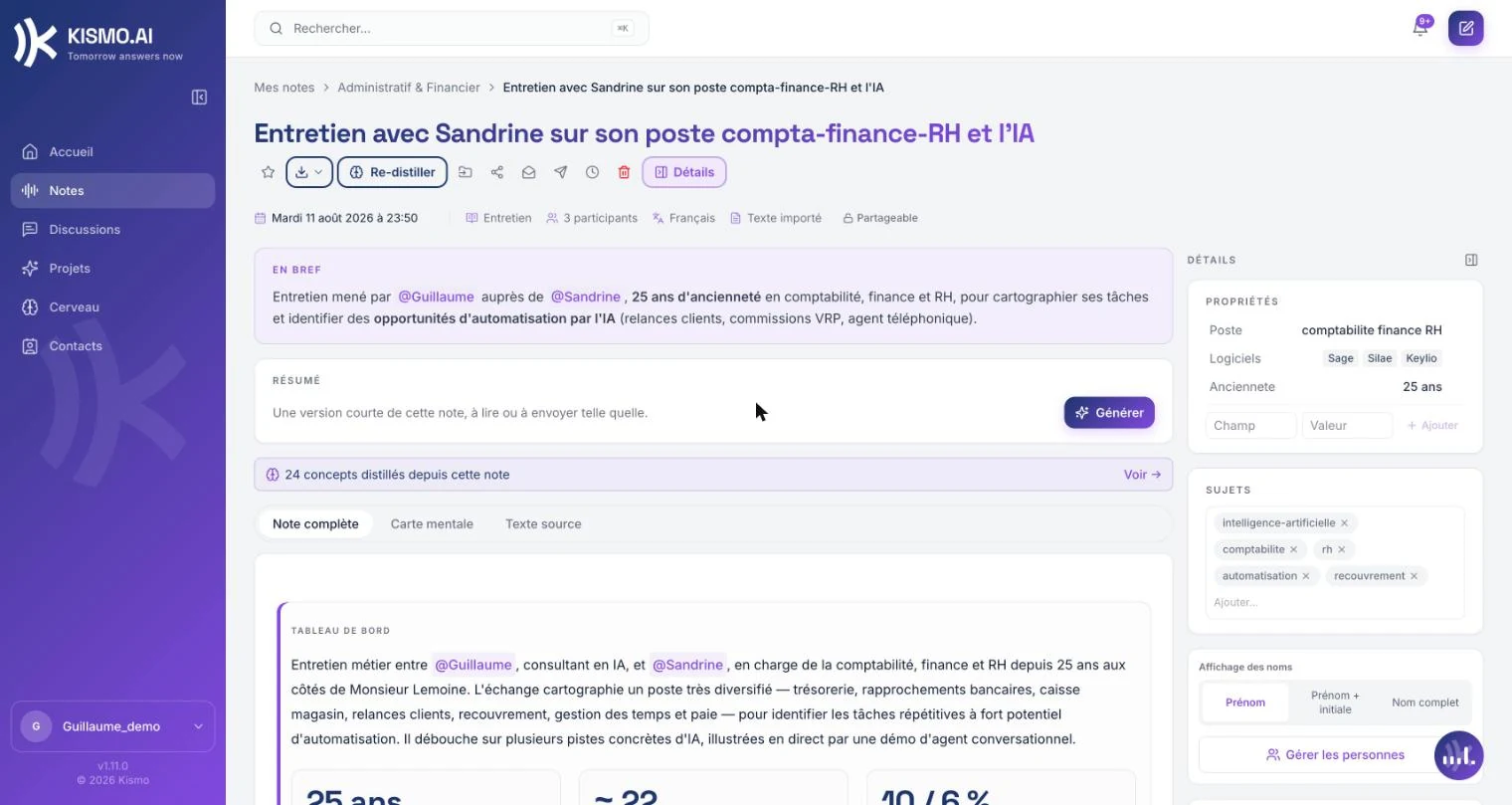
KISMO recognizes an interview and tells the roles apart: who leads the conversation, who answers. The note it returns isn't a wall of text but a structured summary, where what each person said stays attached to the right person. The background a candidate walked through, the expectations a team member expressed: everything is set down, in order, easy to reread weeks later.
The full exchange stays available too. The note keeps the transcript, in case you want to go back to an exact answer rather than its summary.
What you gain
During the interview, your attention goes to the person, not the pen. The silence you leave after an answer is for thinking, not for finishing a scribbled sentence. Afterwards, the write-up already exists: you compare two candidates on what they actually said, not on the impression they left. And in a performance review, the commitments made on both sides are in writing, which makes the next one easier to prepare.
Going further
The structure of a note, its views and its editor are detailed on The note. For conversations with several people, see team meetings.
What happens next?
Every note of this kind can be distilled, that is, reduced to what matters and kept current, so it joins your company's Brain. You validate what goes in, and you ask it a question later.
Discover the Brain