
The assistant that has read your notes
It answers in your language citing its sources, it never serves stale knowledge as if it were true, and it says when two versions contradict each other.
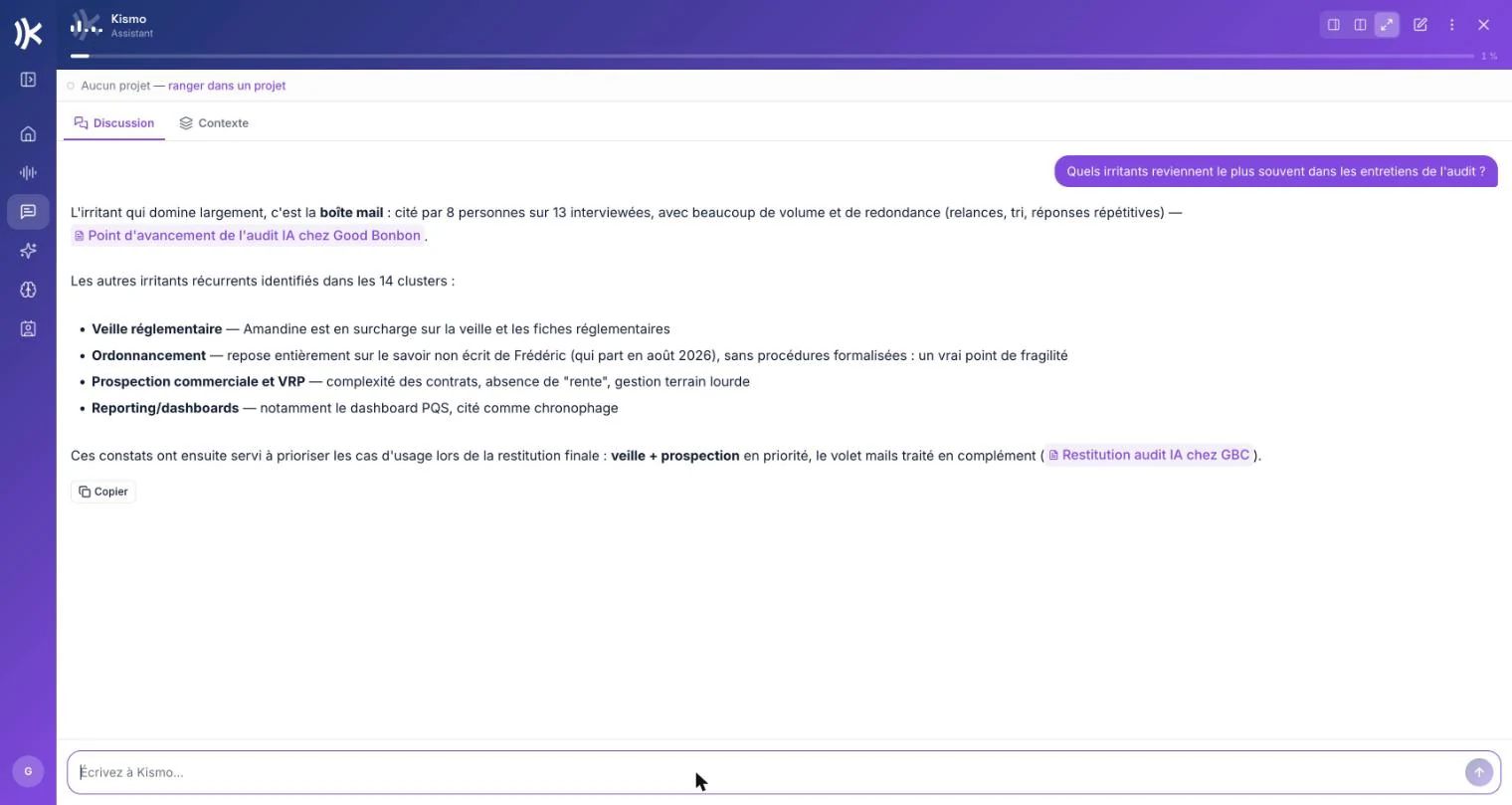
Sourced answers
What did we decide with that supplier in April? Ask. The assistant searches your notes, reads the transcripts, spots the conversations related to the topic and answers while citing its sources. You check directly against the original note. It can also list your folders, projects and chats, or find the participants of a conversation.
The web as a complement
When the answer is not in your notes, the assistant can search the web and read a page online. Your notes first, the web second.
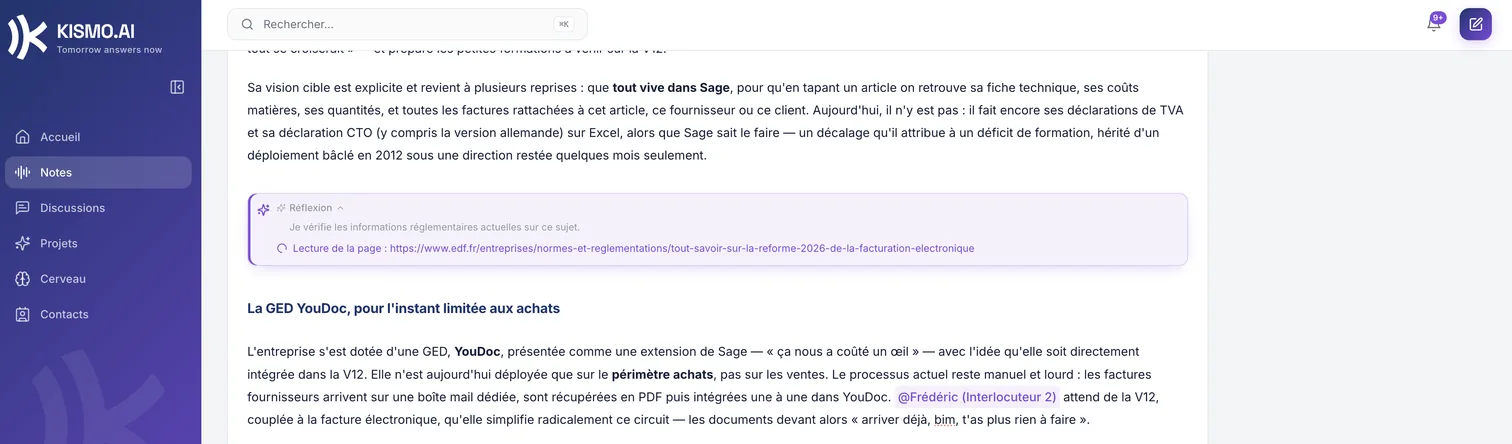
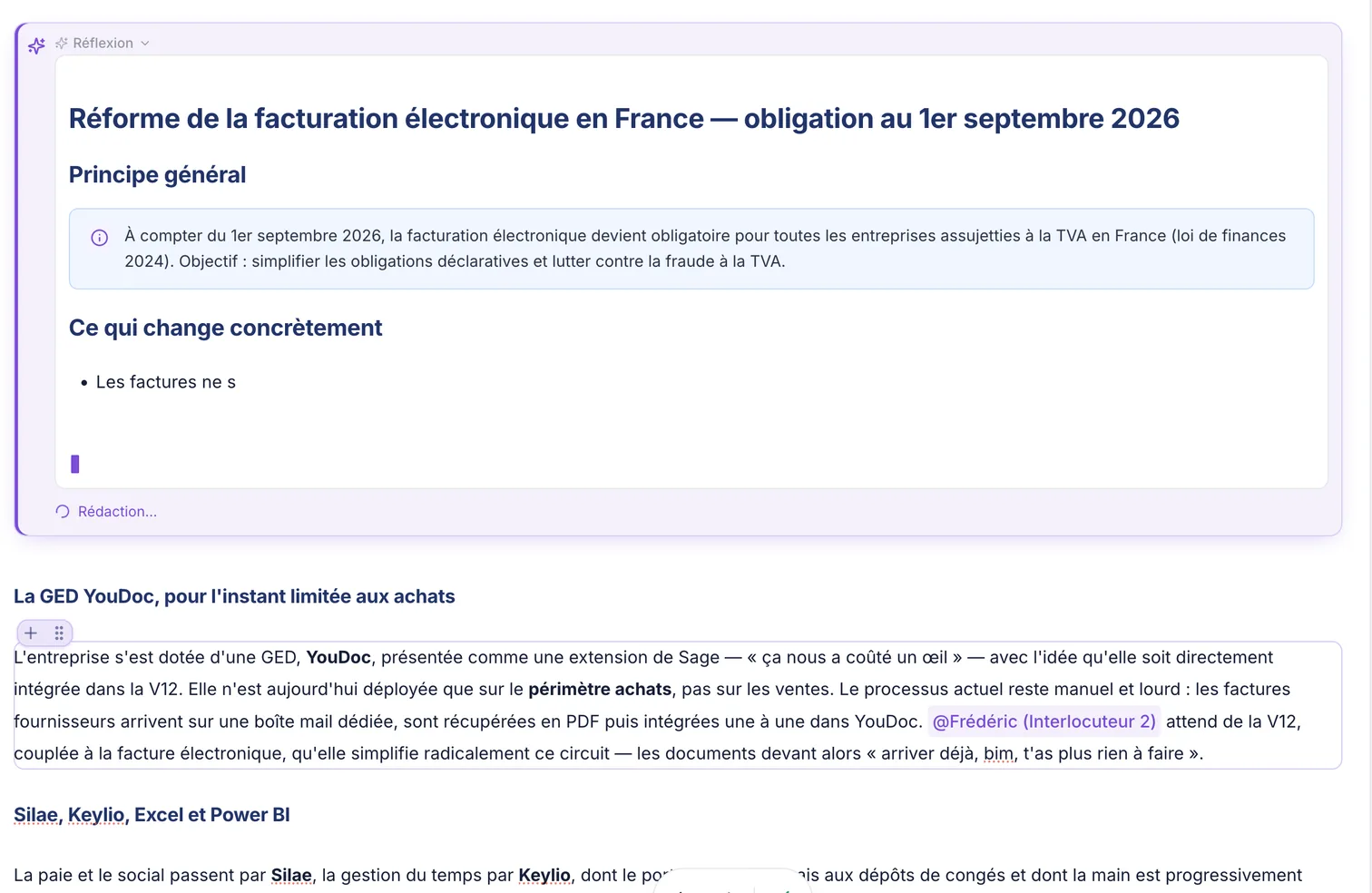
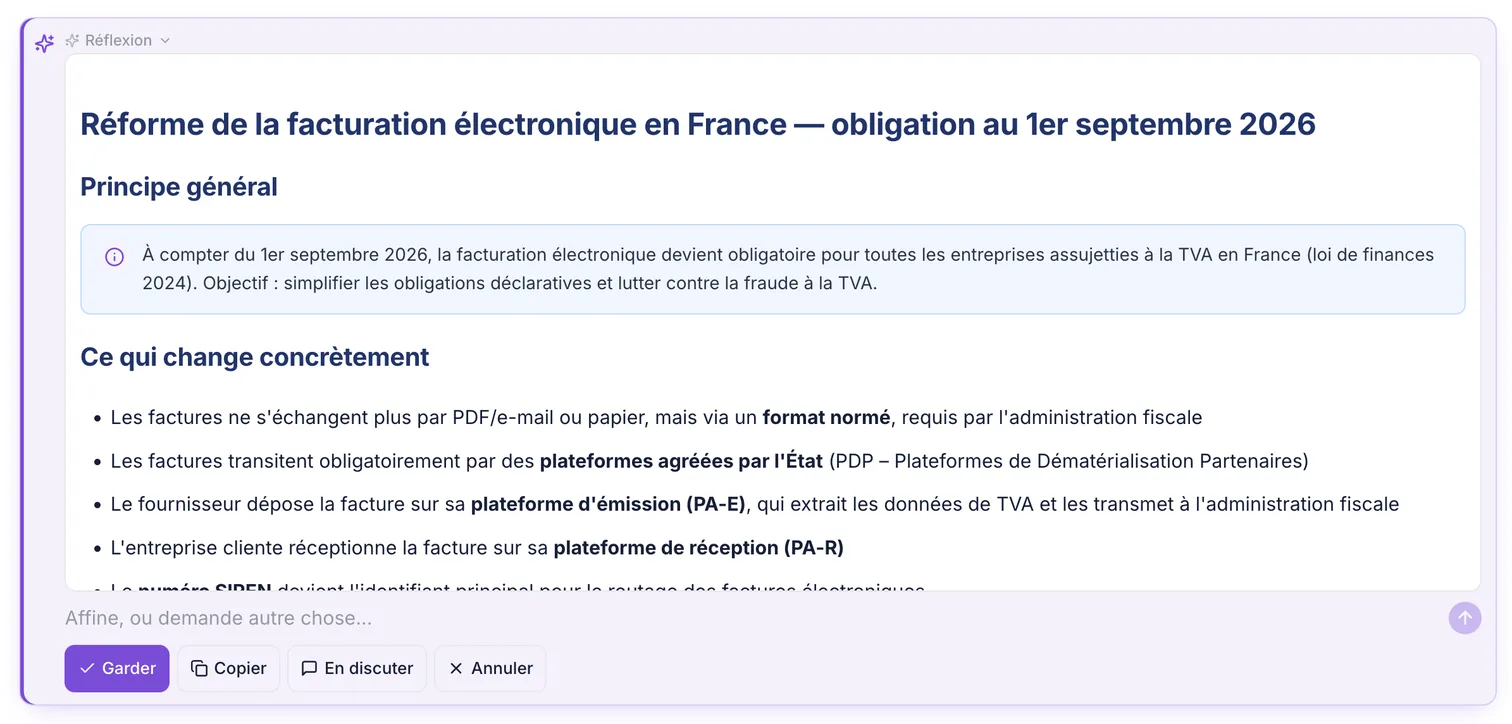
Image 1 / 3
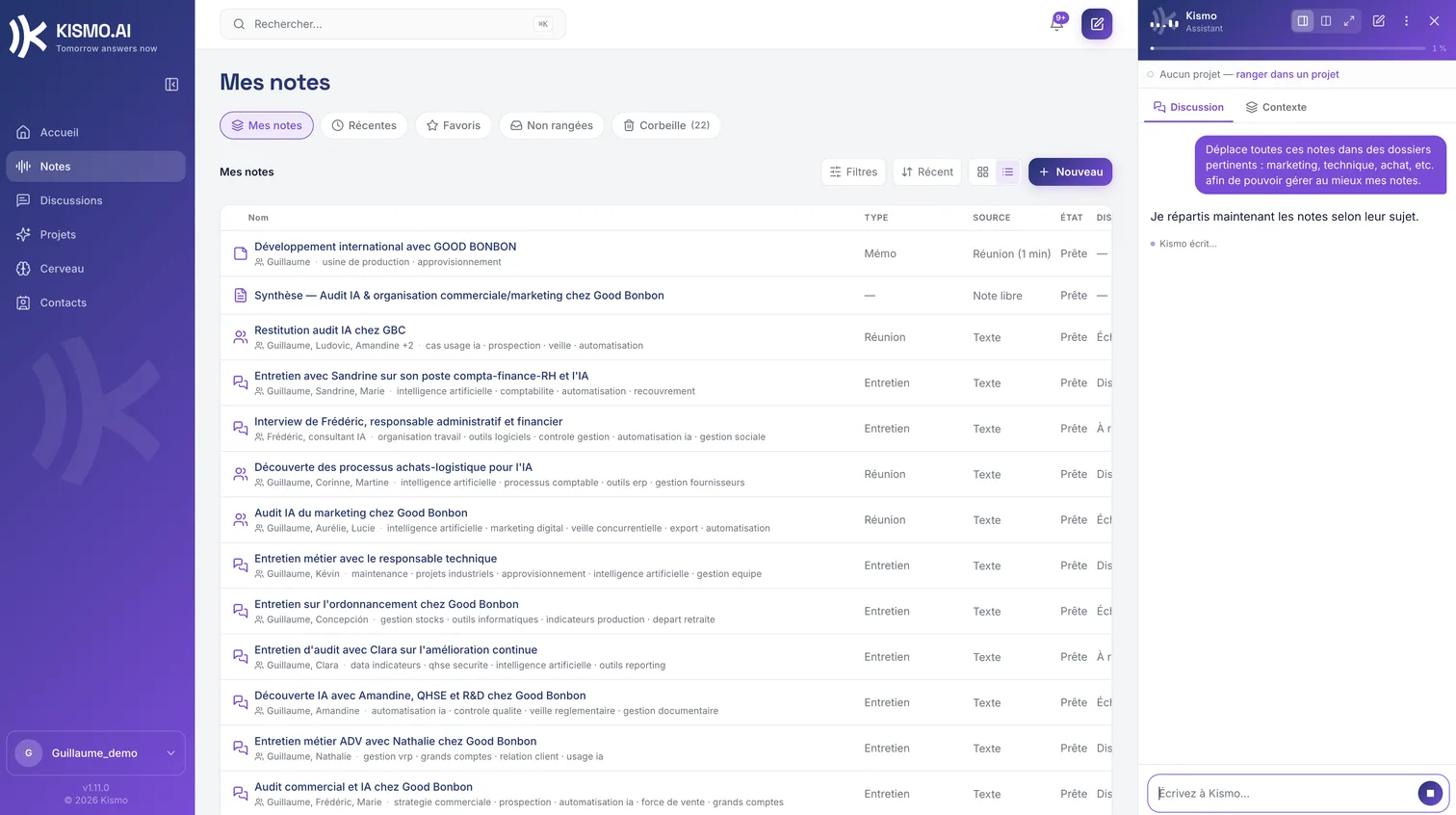
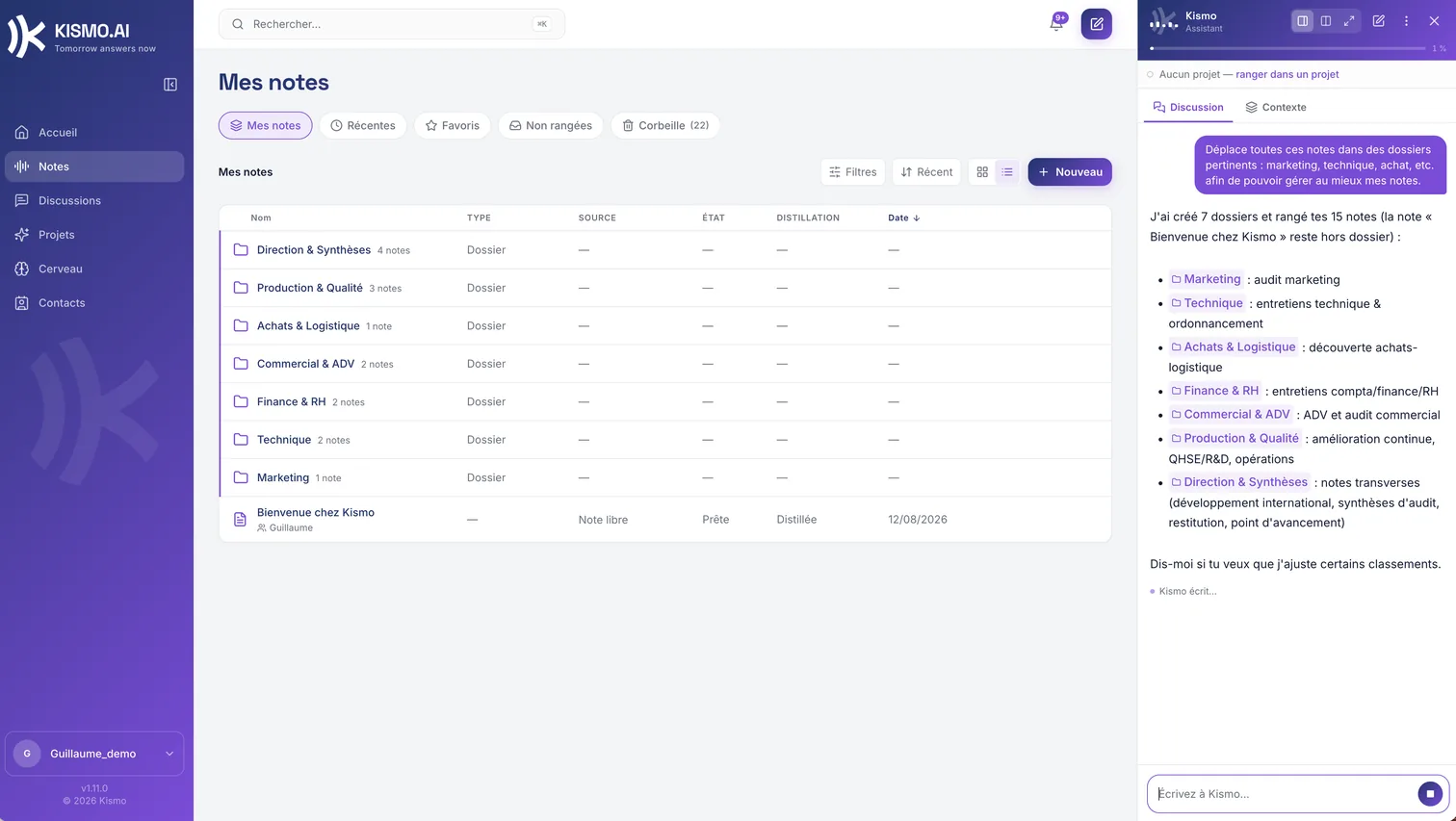
It files things, when you ask
Tell it to create a folder and move the notes on a topic into it: done. The assistant acts inside your KISMO space, only when you ask it to.
Projects for topics that last
A project gathers reference notes, a description and the related chats. Documents produced by the assistant are collected there. You follow a client, a hire or a job site without starting from scratch at every chat.
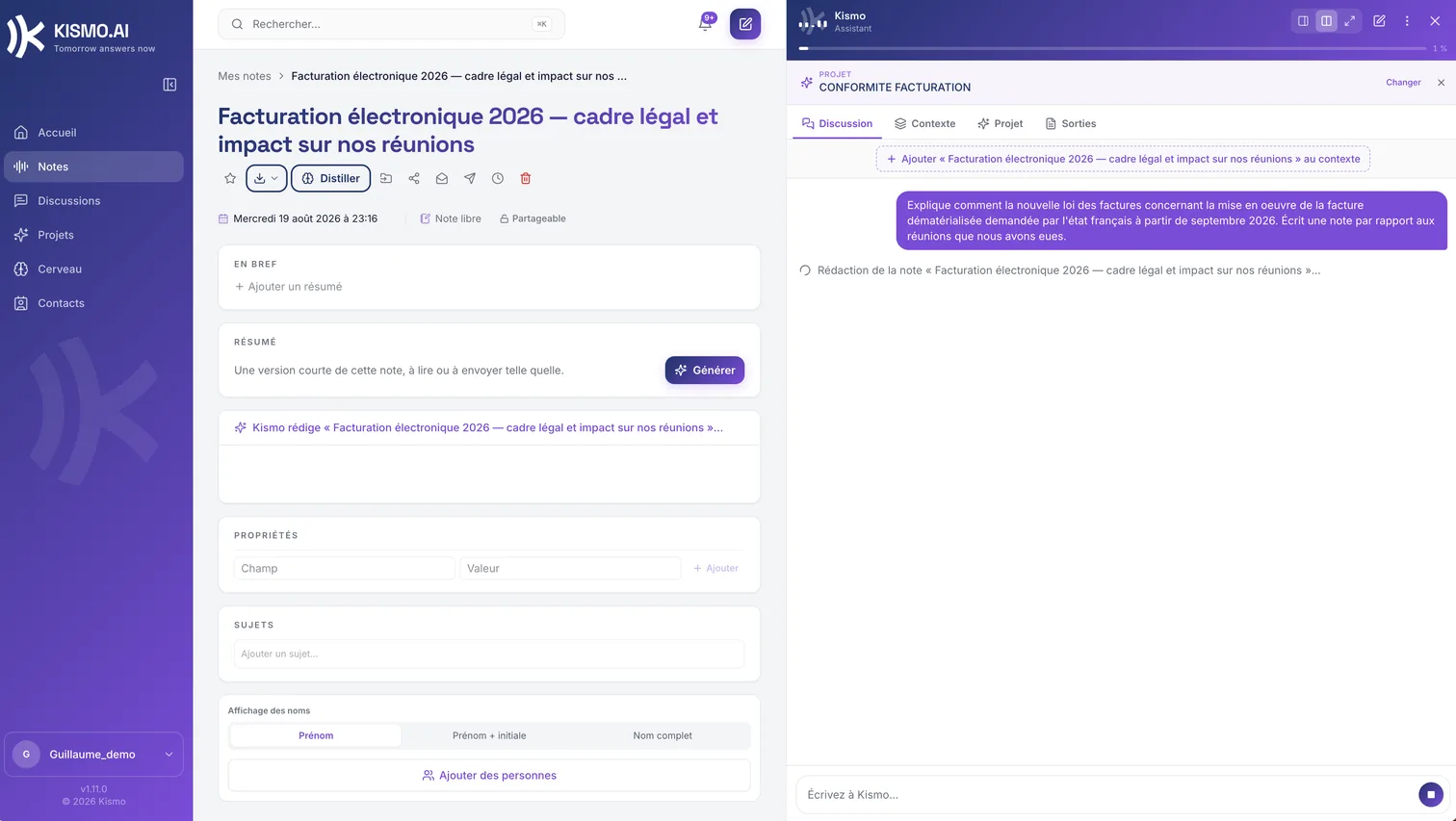
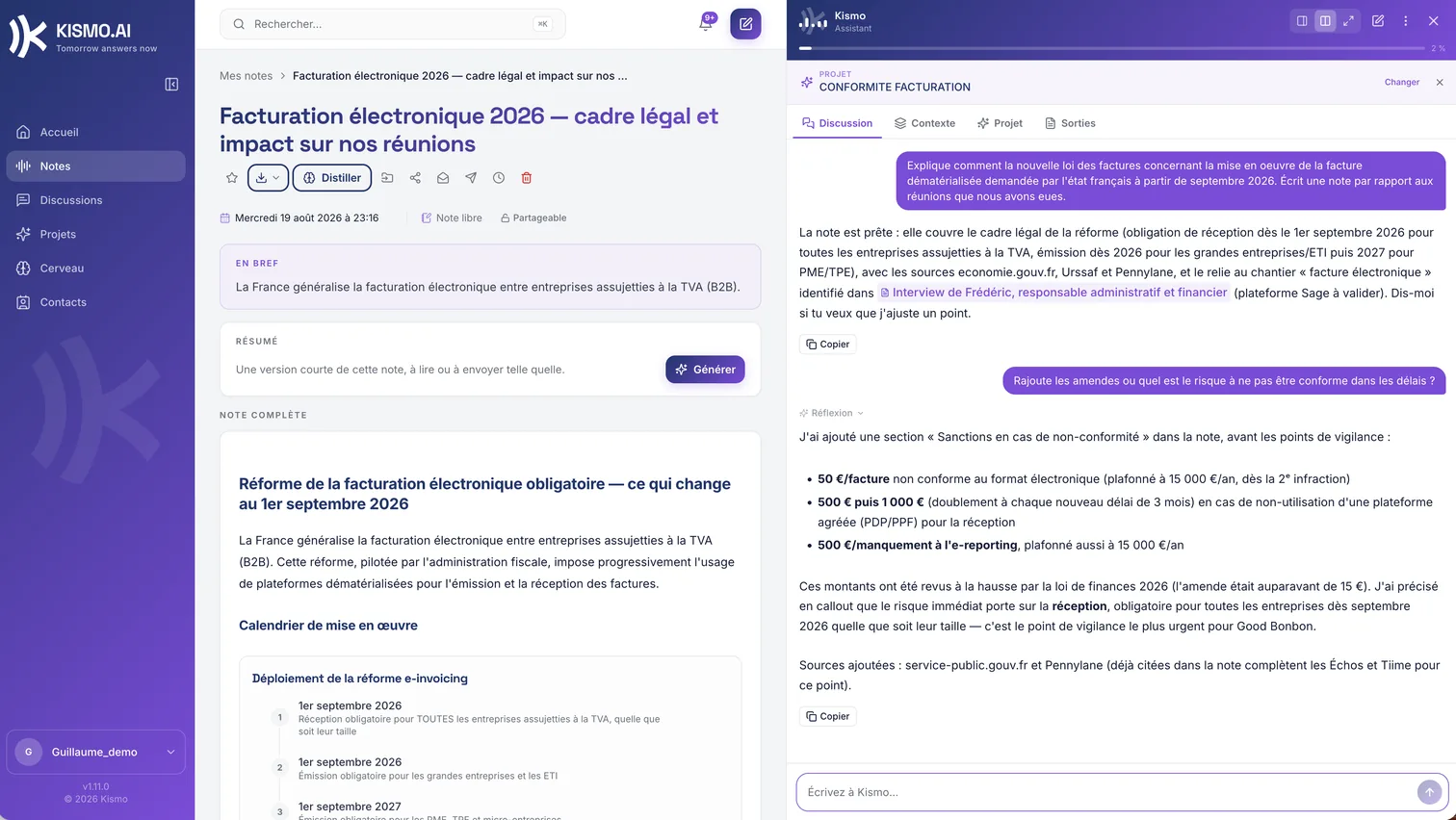
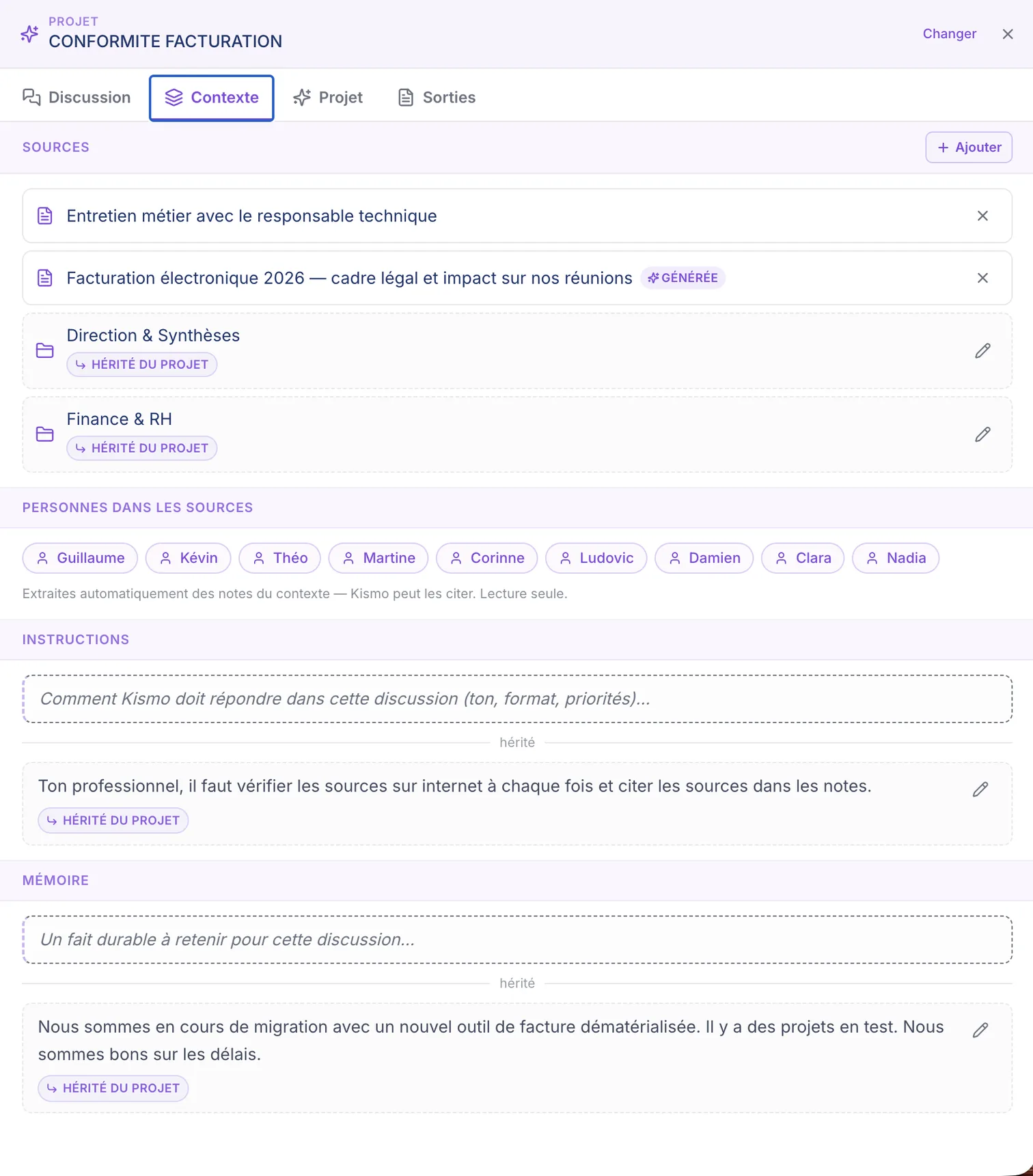
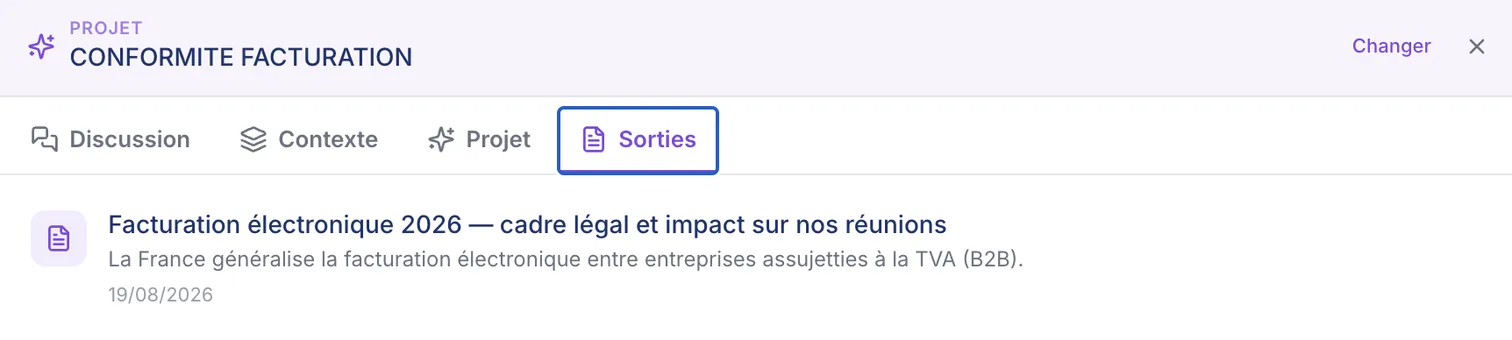
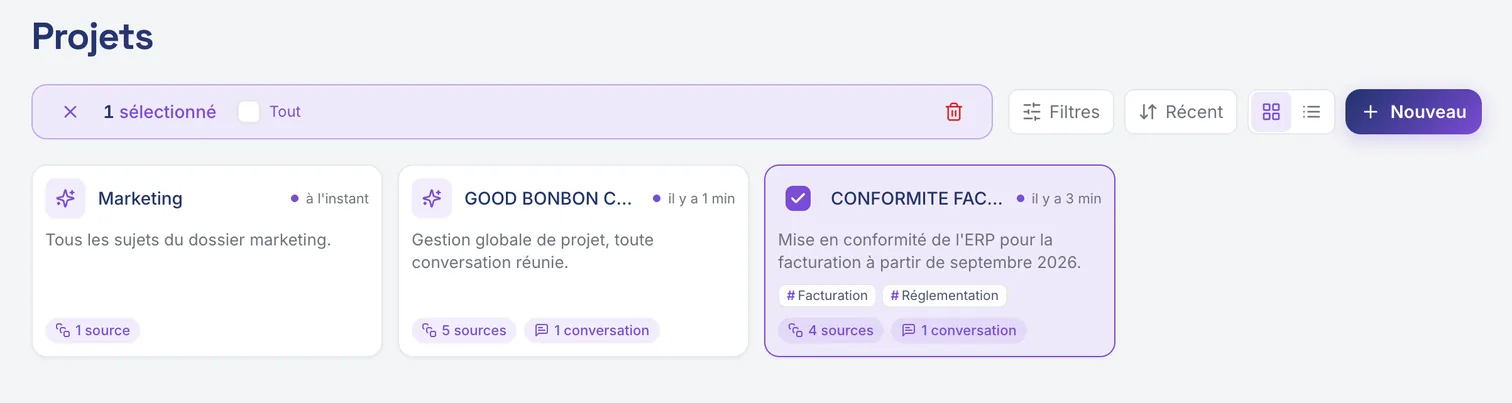
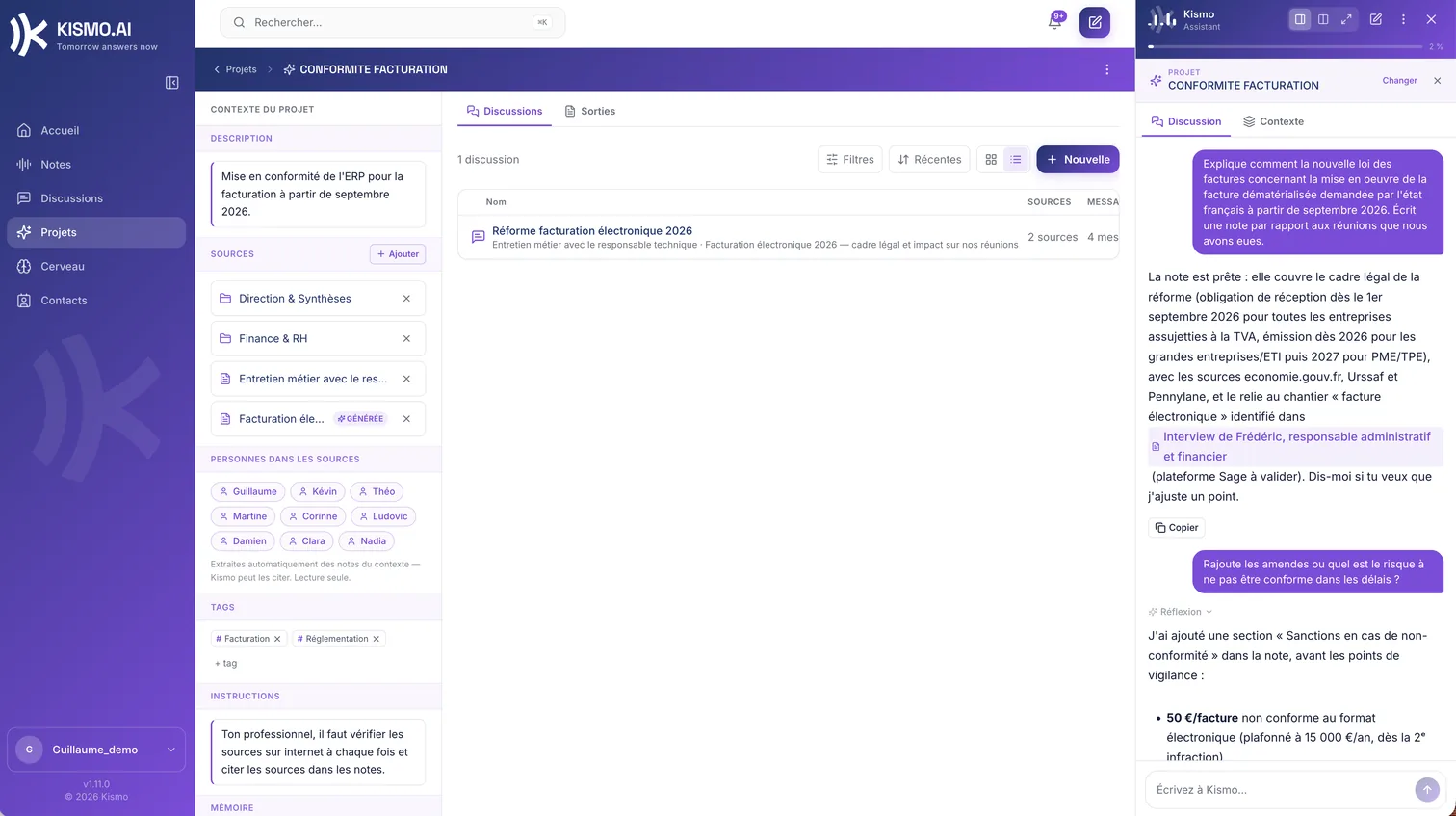
Image 1 / 6
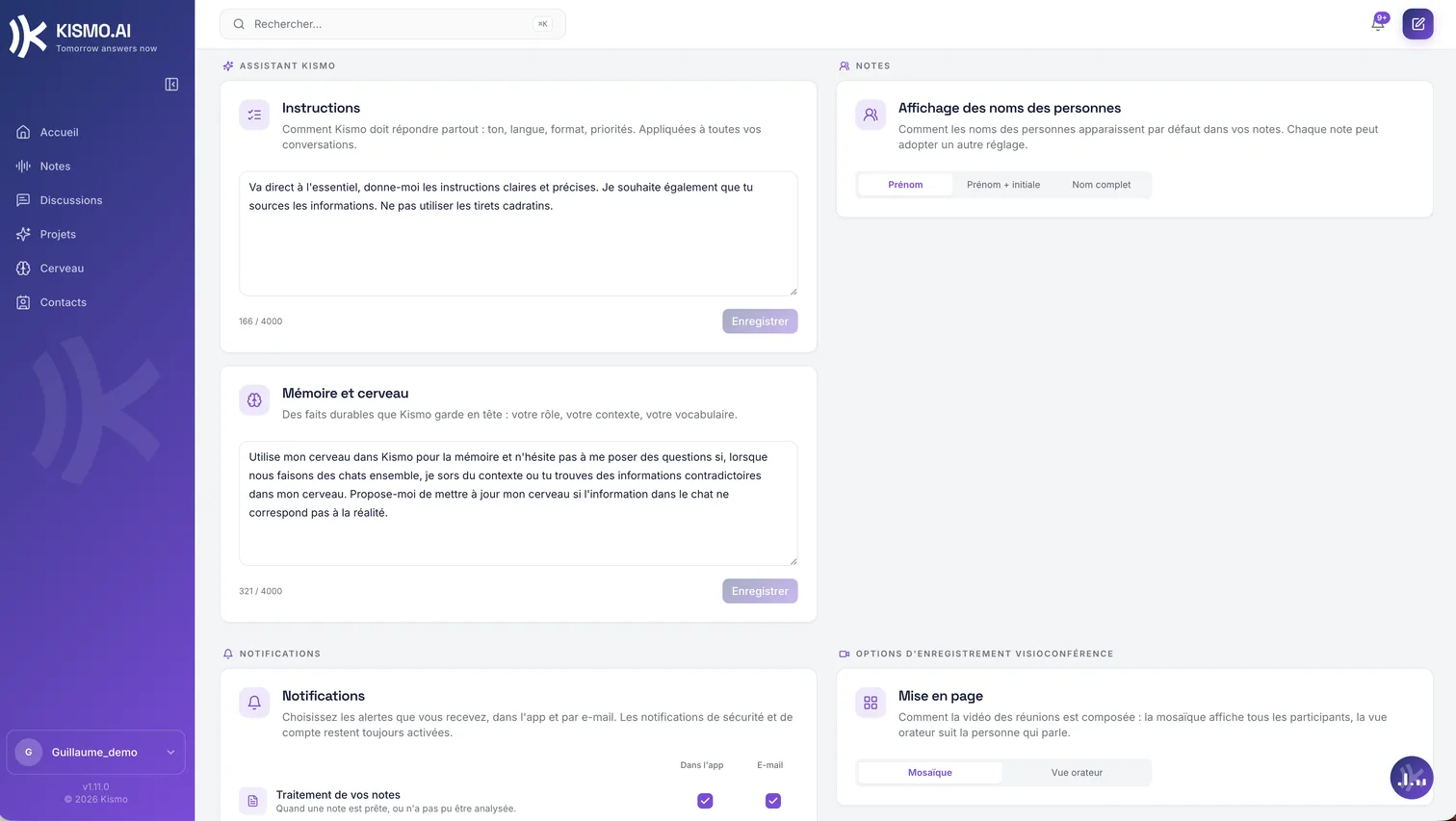
A memory and standing instructions
Give your context once: your job, your constraints, the way you work. The assistant applies it to every exchange after that. You stop repeating yourself.
From a chat to a note
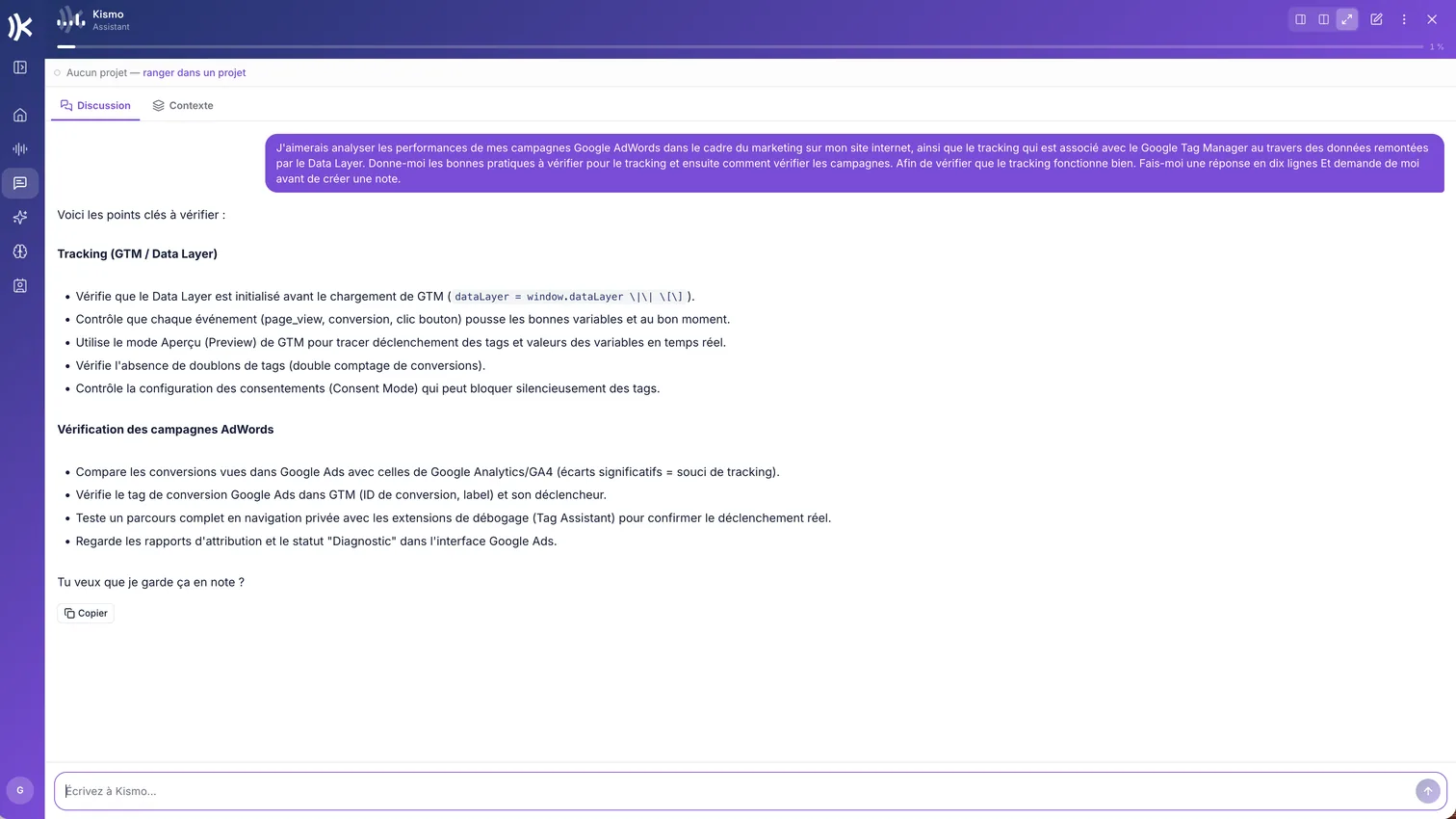
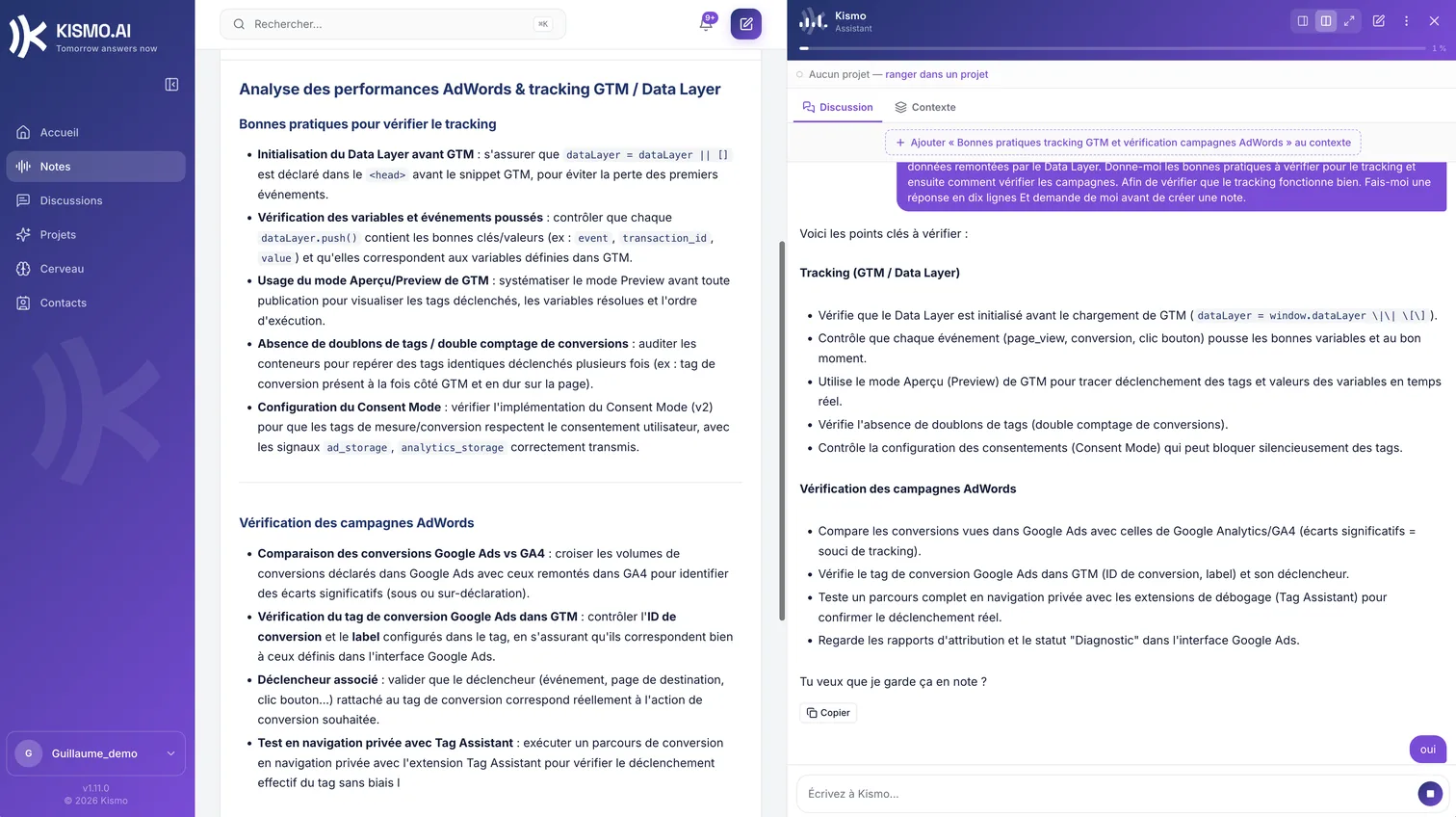
A chat that gets somewhere deserves better than a conversation history. One click turns it into a note, filed with the others in your workspace.
Available everywhere in your account
The assistant opens as a side panel on any page of your account, and a dedicated page gathers your chats. What it reads is your notes: their content is detailed on The note page.
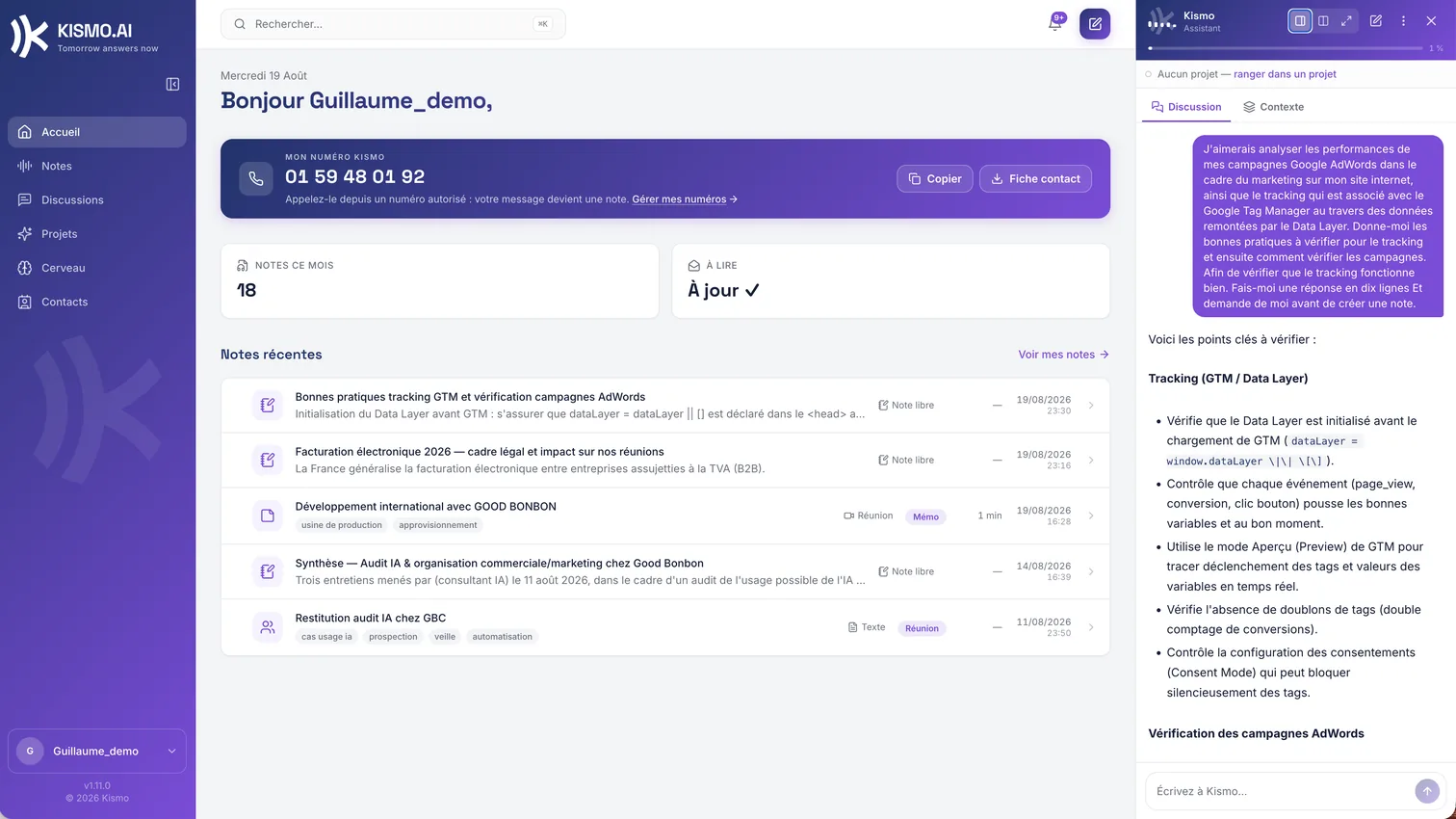
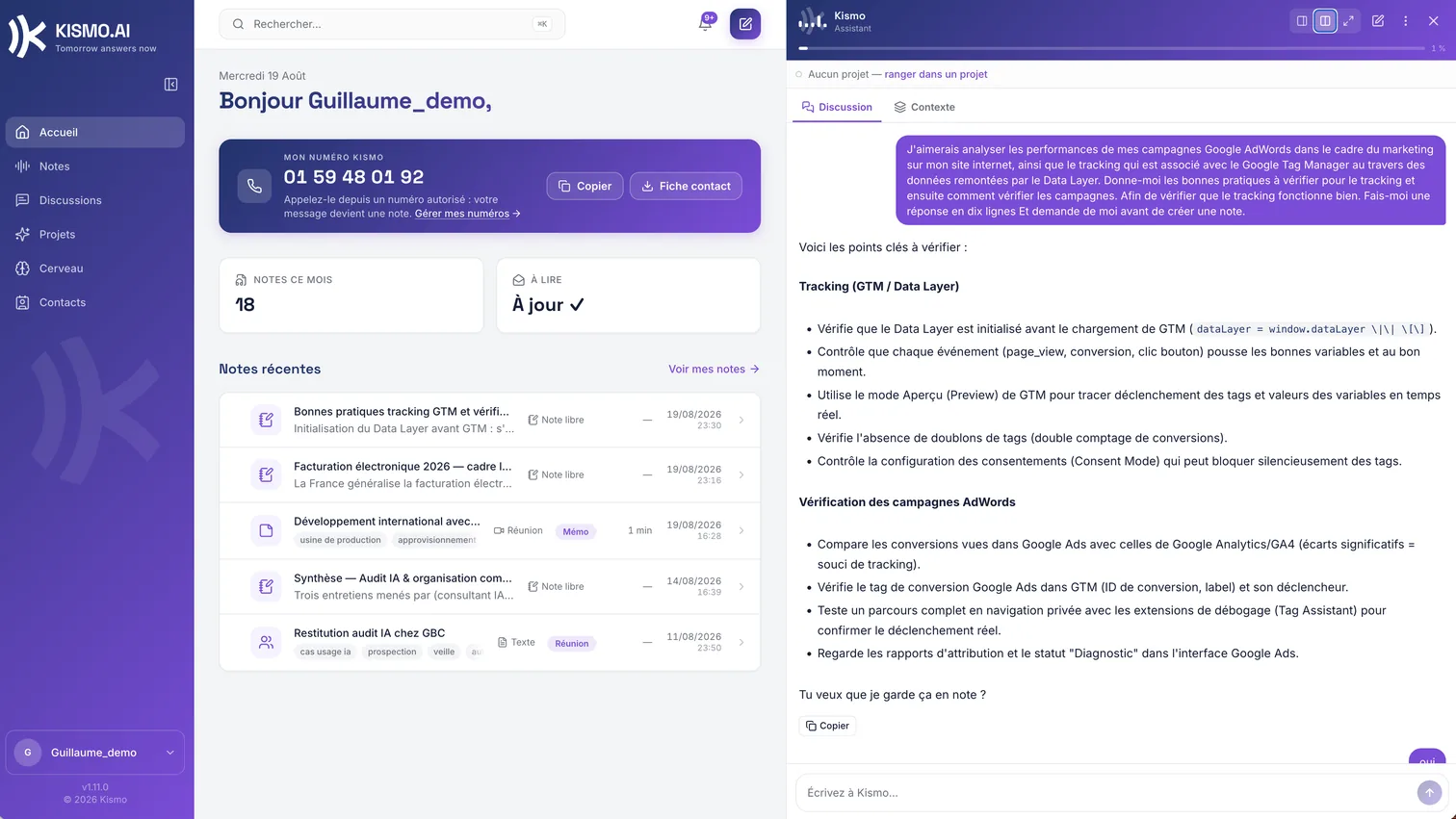
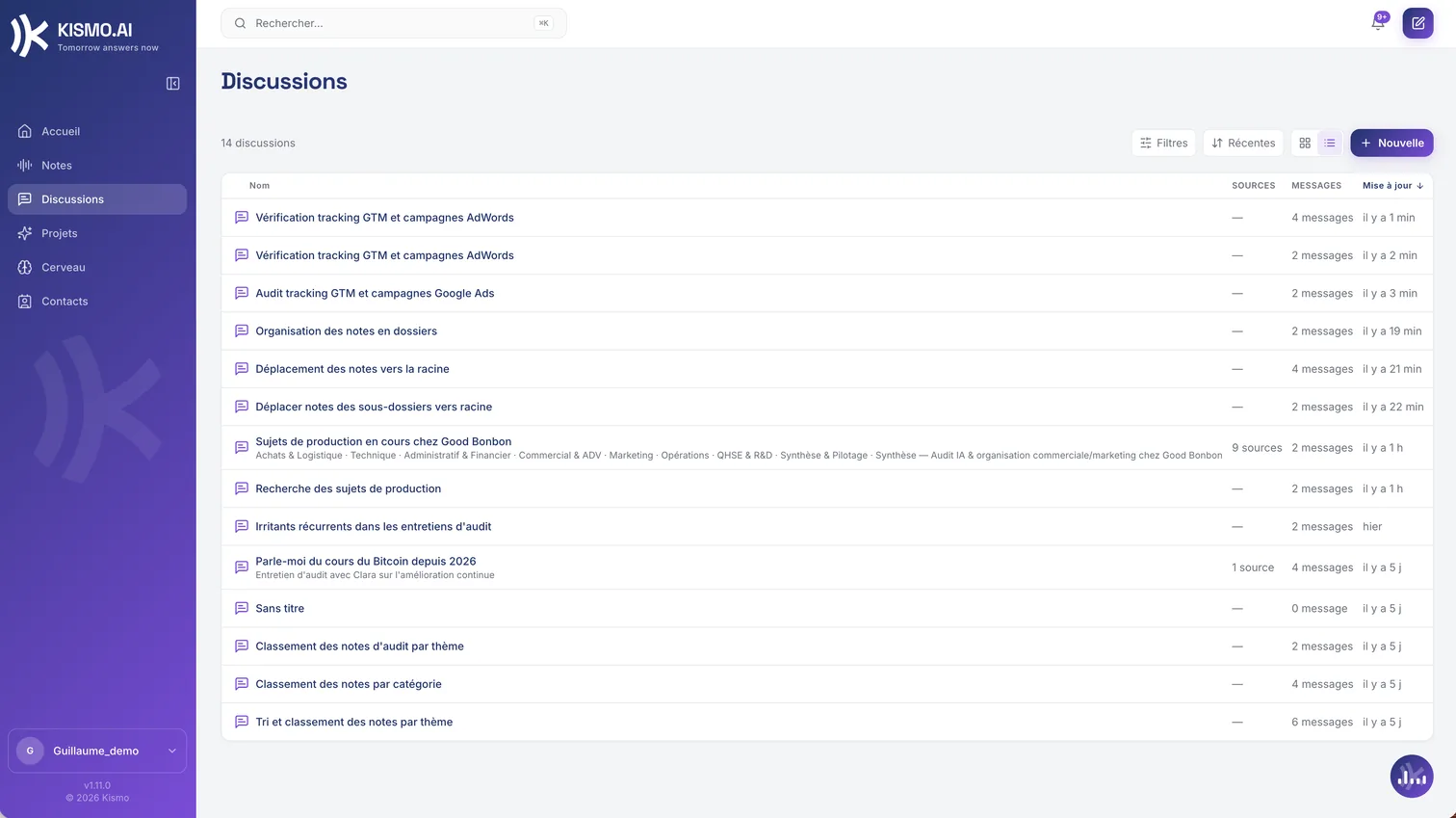
Image 1 / 3
The note is the raw material. The Brain is what is left of it.
A note keeps what was said. The Brain keeps what your company took away from it: what it knows, what it decided, what it has to do, what it is still wondering about. You validate what goes in.
Discover the Brain