
The contact book: who's who, without the upkeep
Alongside the Brain, the address book is the other memory drawn from the same conversations. One keeps what you know, the other who you know.
A book that fills itself
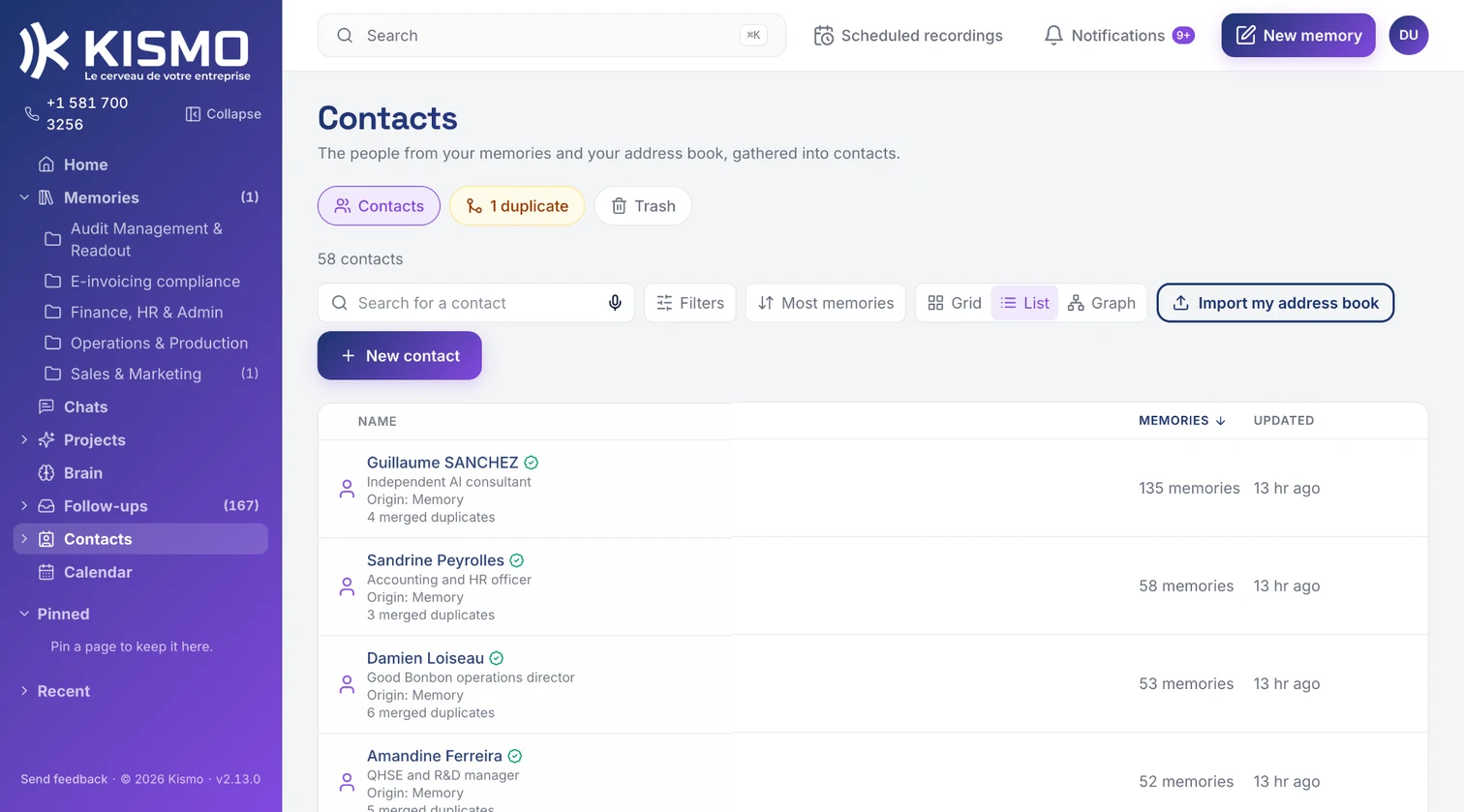
With every analyzed memory (a note, in everyday words), the people present or mentioned join your book: identity, role, details heard in the conversation. Recognition relies on strong signals first, phone number and email. Someone who is only mentioned, but carries useful information, gets a card too.
One card per person, one single truth
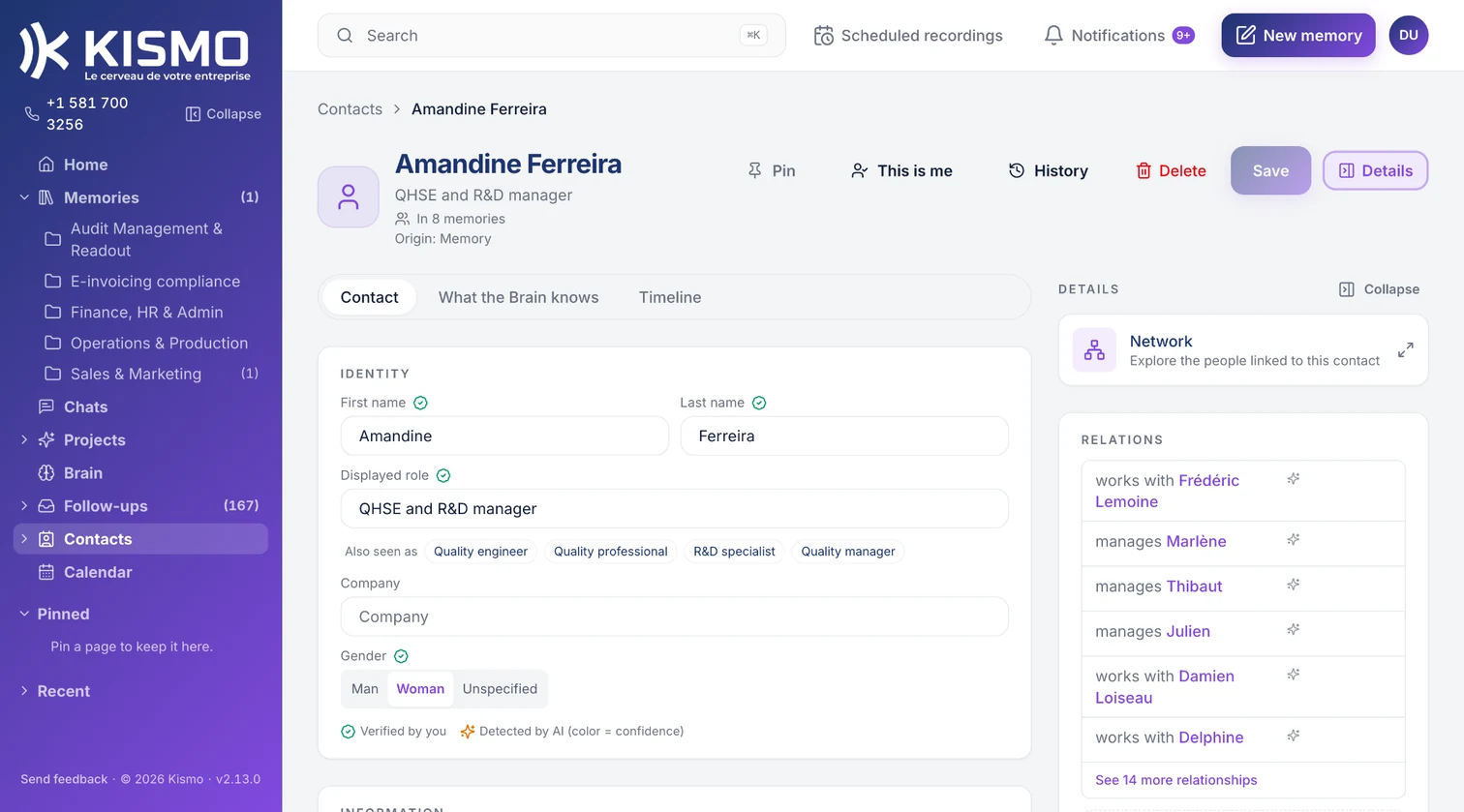
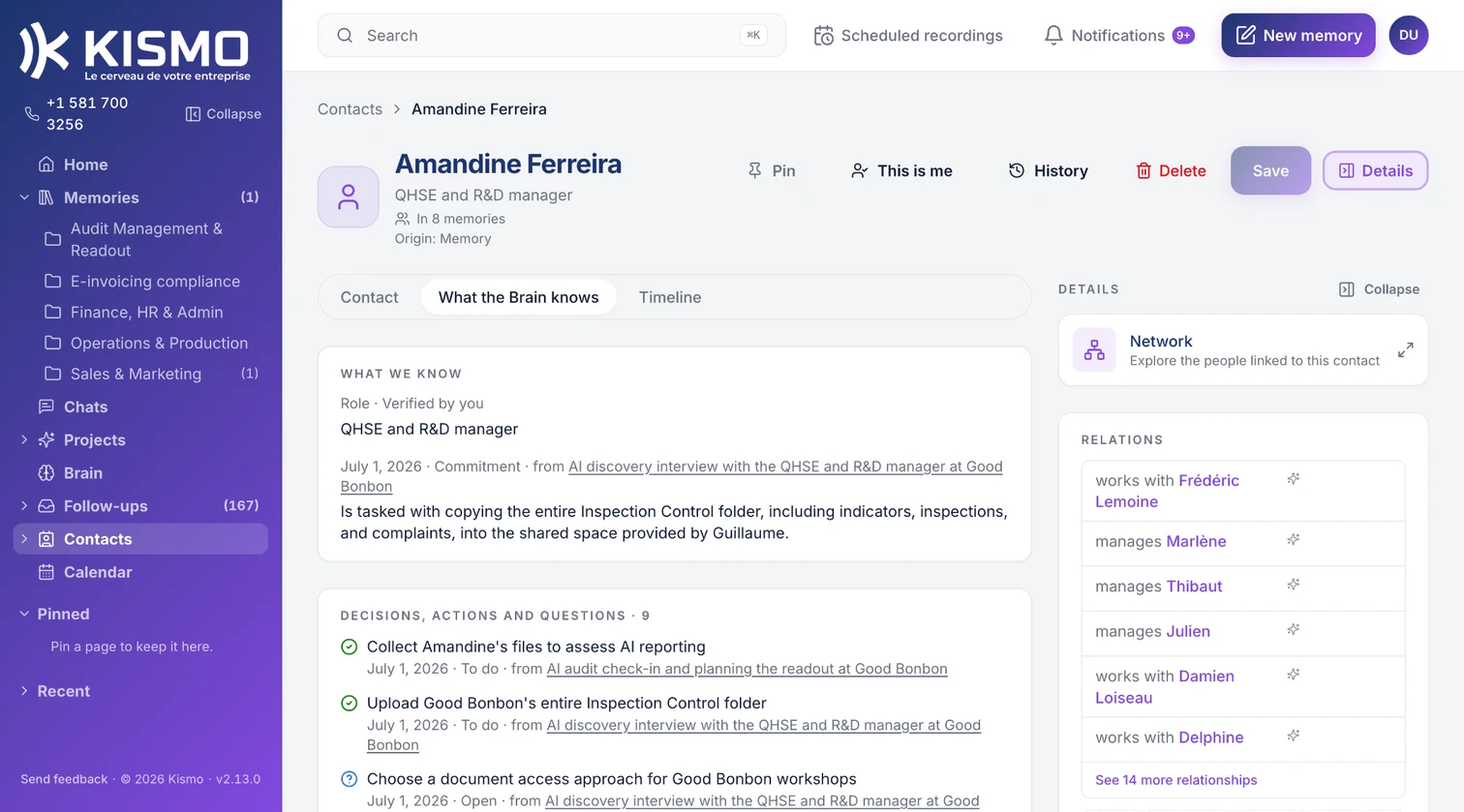
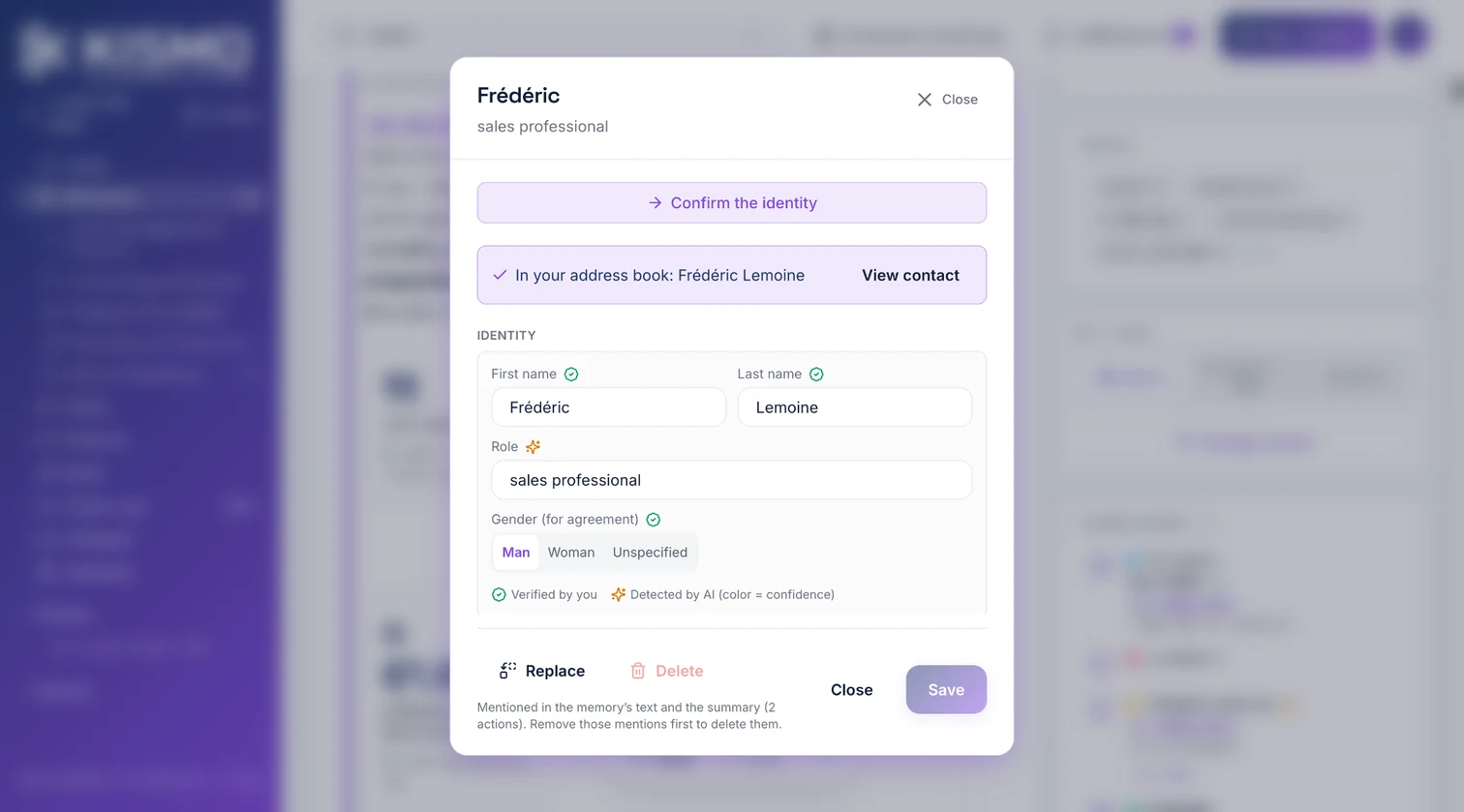
The card gathers what your memories know about someone: role, company, attributes collected across conversations, each tied to the memories where it appears. Fix a name once: it updates in every memory, export and share. What you validate is never overwritten by AI, and what AI detected stays flagged as such. The name display format you choose applies everywhere.
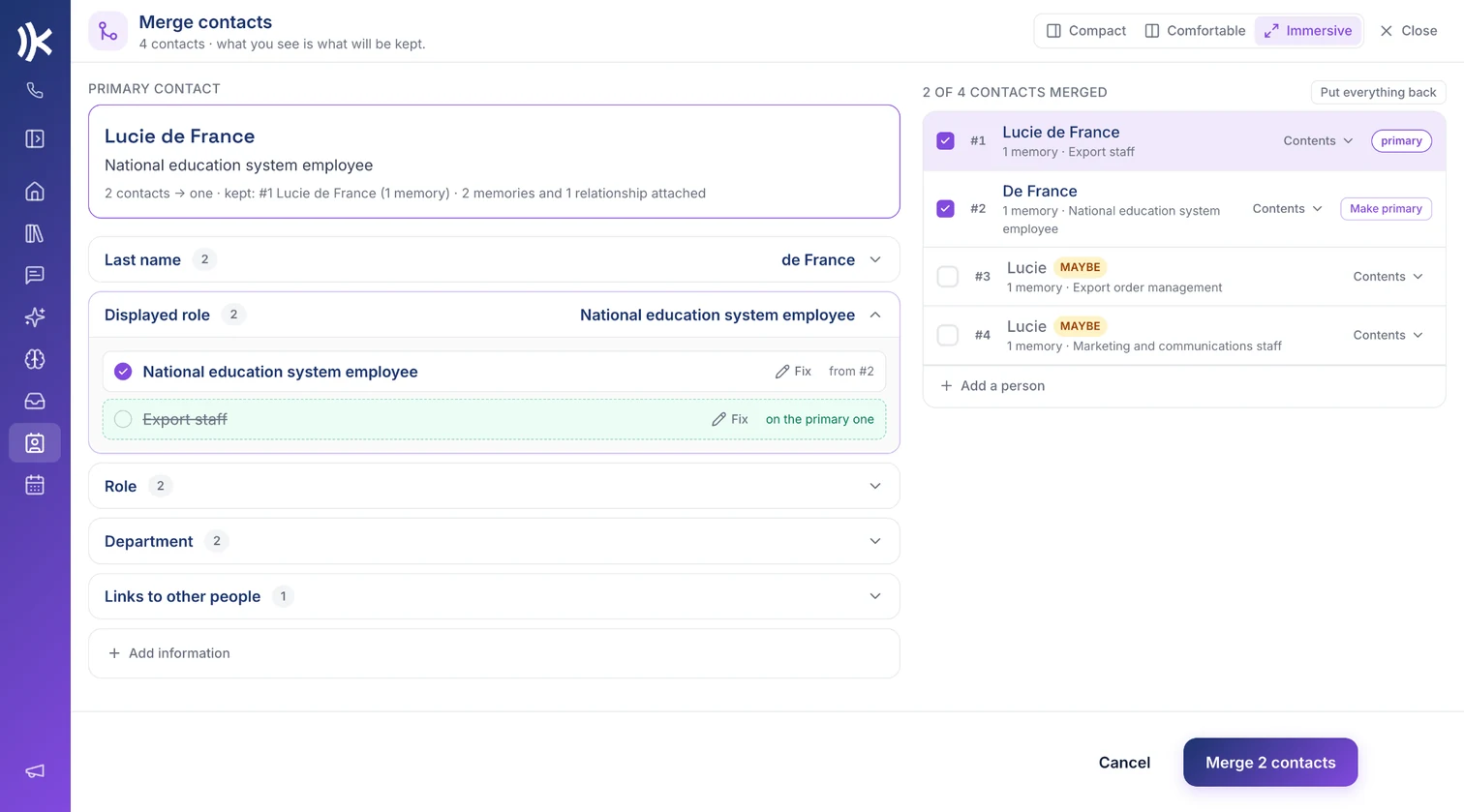
Duplicates show up, you decide the merge
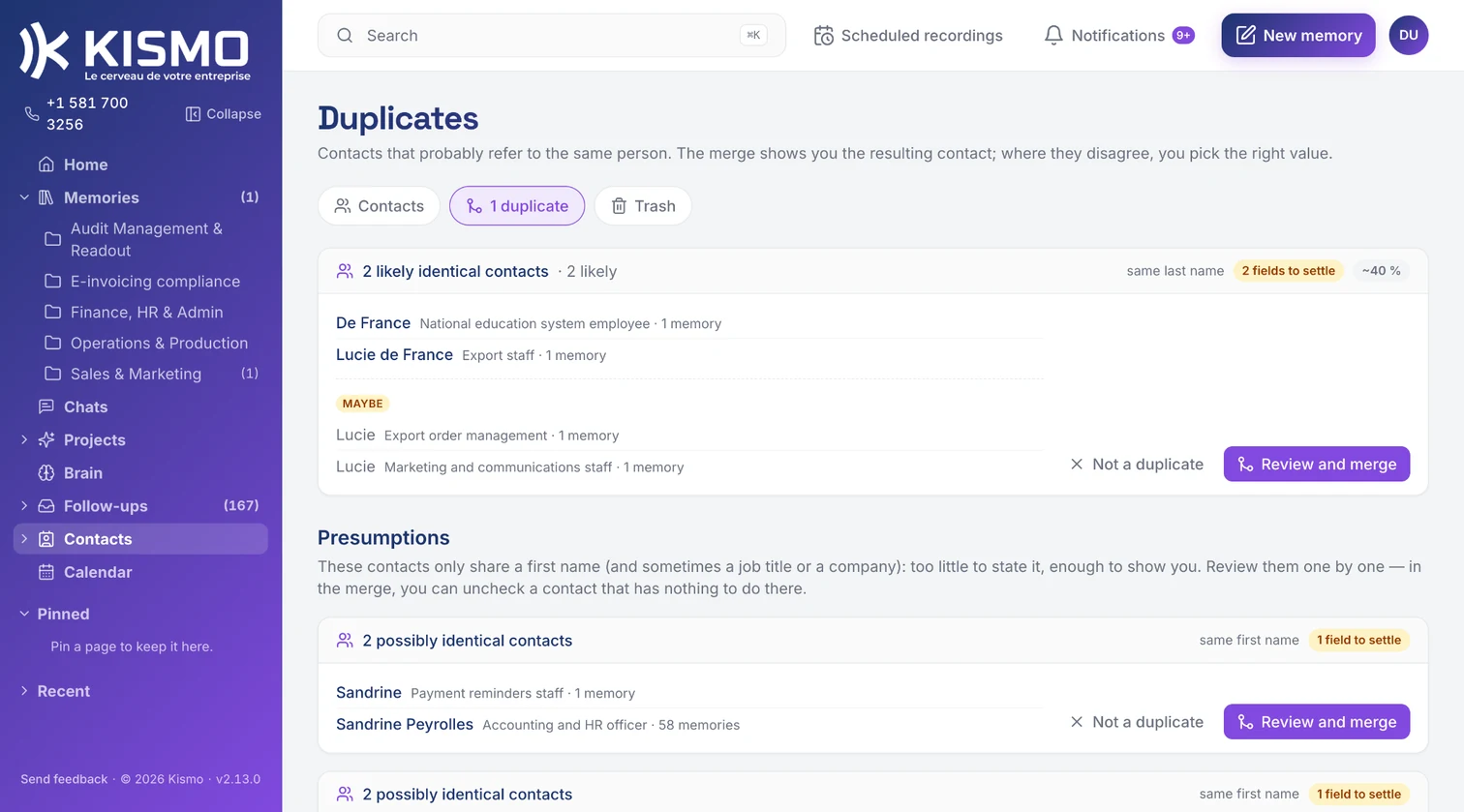
The same person keeps coming back under three spellings? KISMO groups the cards that probably describe one person and shows you the resulting card before merging. You arbitrate field by field, or dismiss the match in one click. The information from merged cards joins the card you keep. Names distorted by transcription get caught up: the book learns from your corrections and matches spellings that sound alike, and never merges on sound alone.
The network draws itself
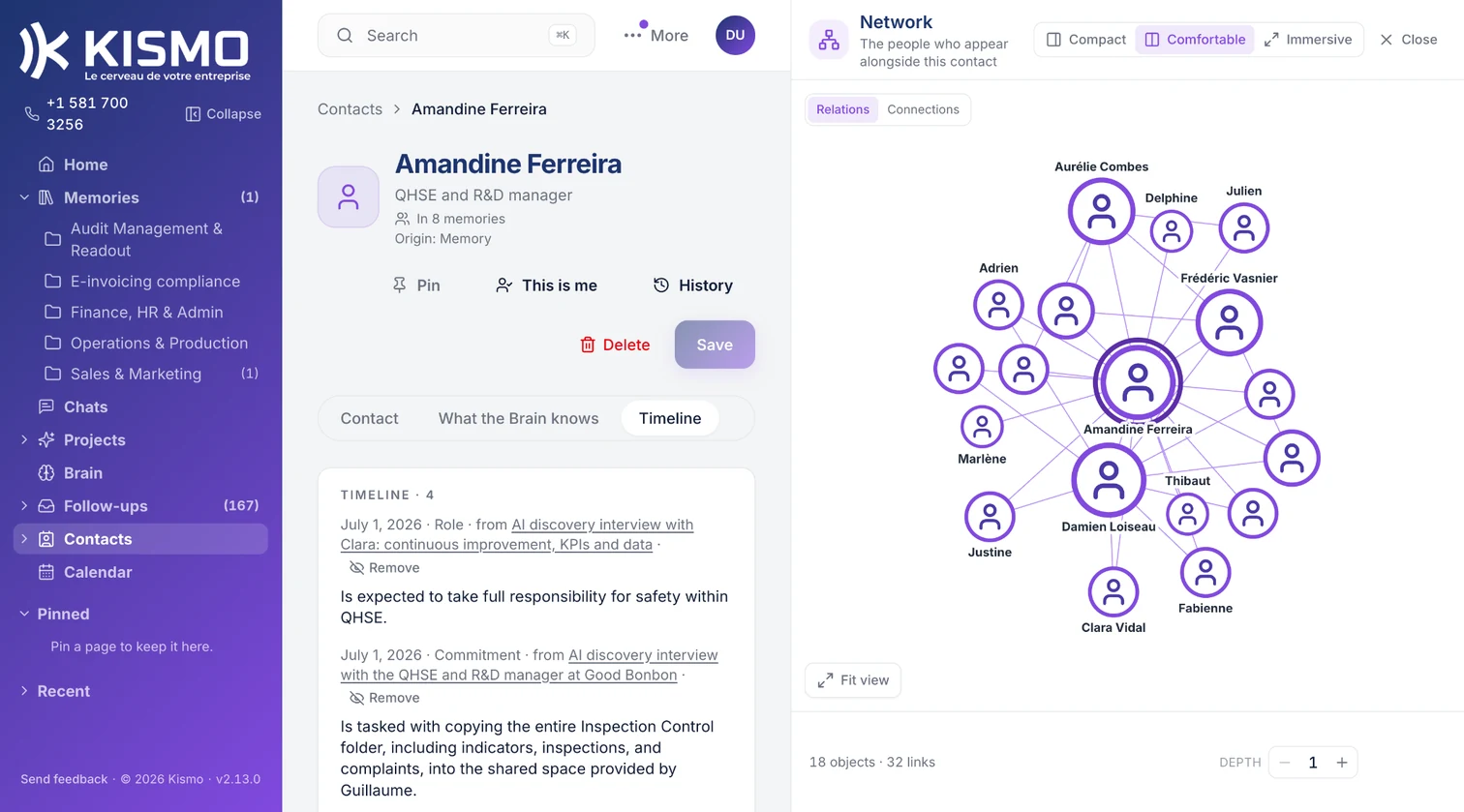
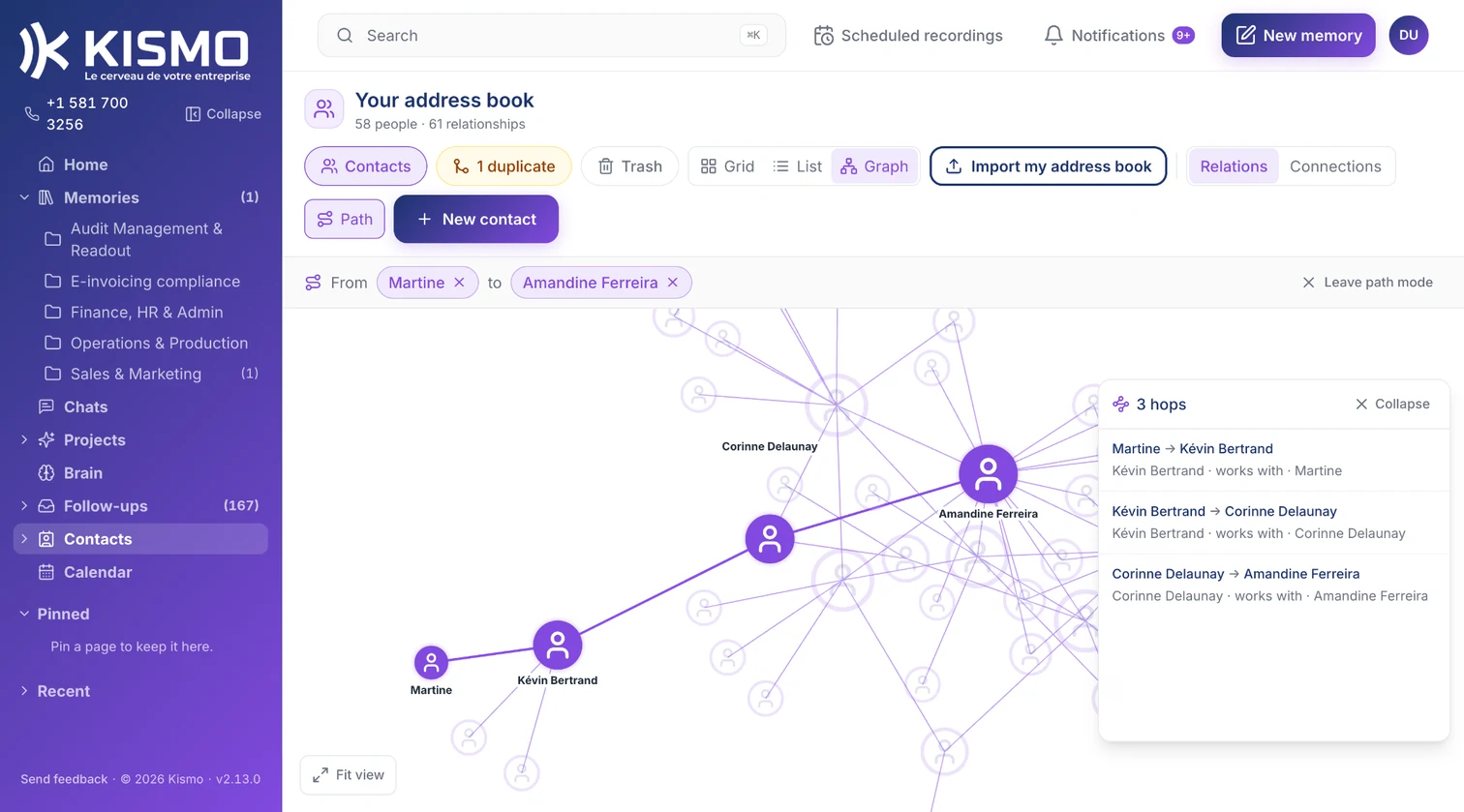
Who works with whom? The book's graph offers two readings: connections, when people appear in the same memories, and relationships, extracted from what was said (colleague of, reports to, manages). Path mode links two people and shows through which memories they touch.
Search the way you speak
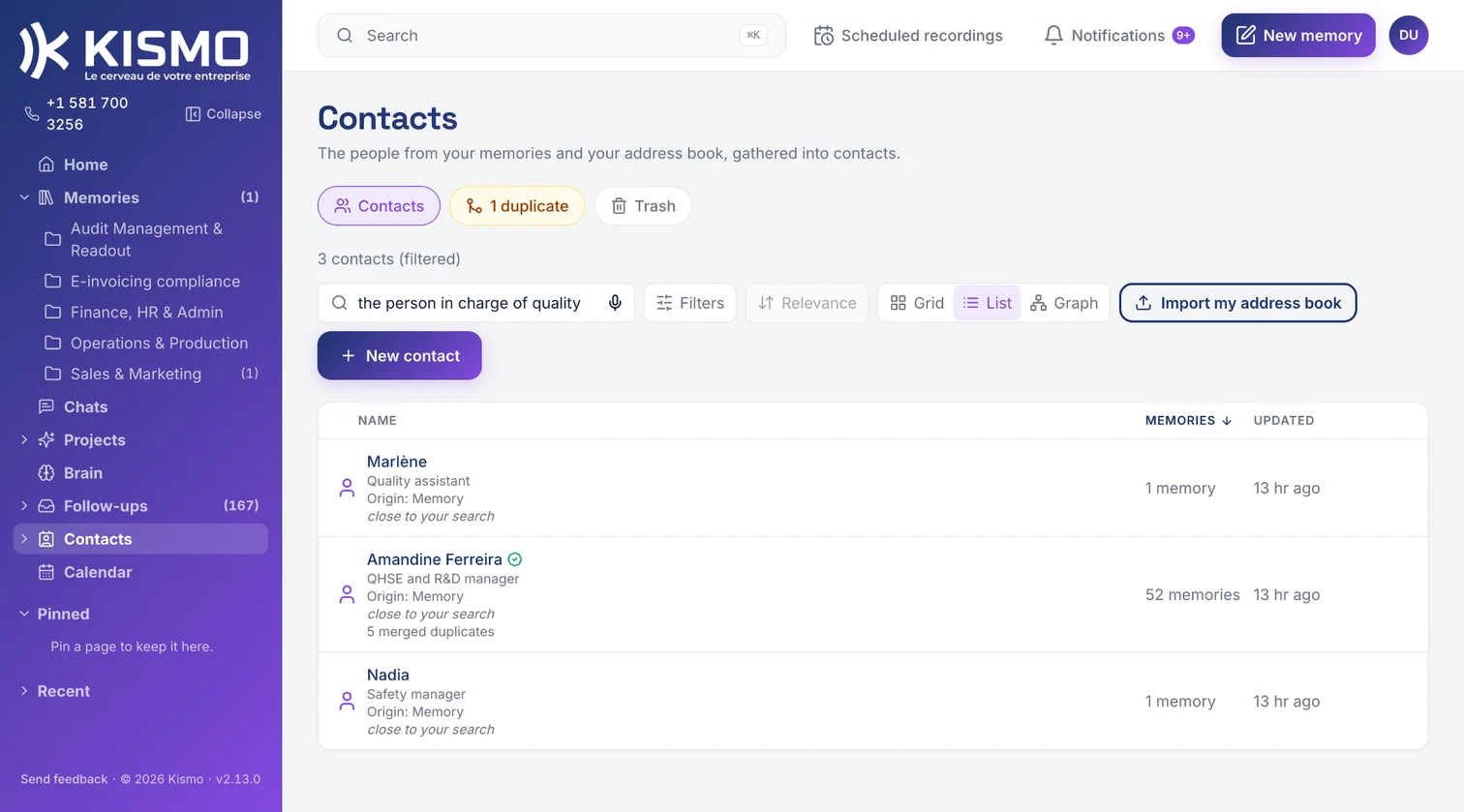
"Who's the tax expert?" The book's search understands what the question means: it covers names, roles and card attributes. The book also answers in the global search, everywhere in your account.
The people in a memory, under control
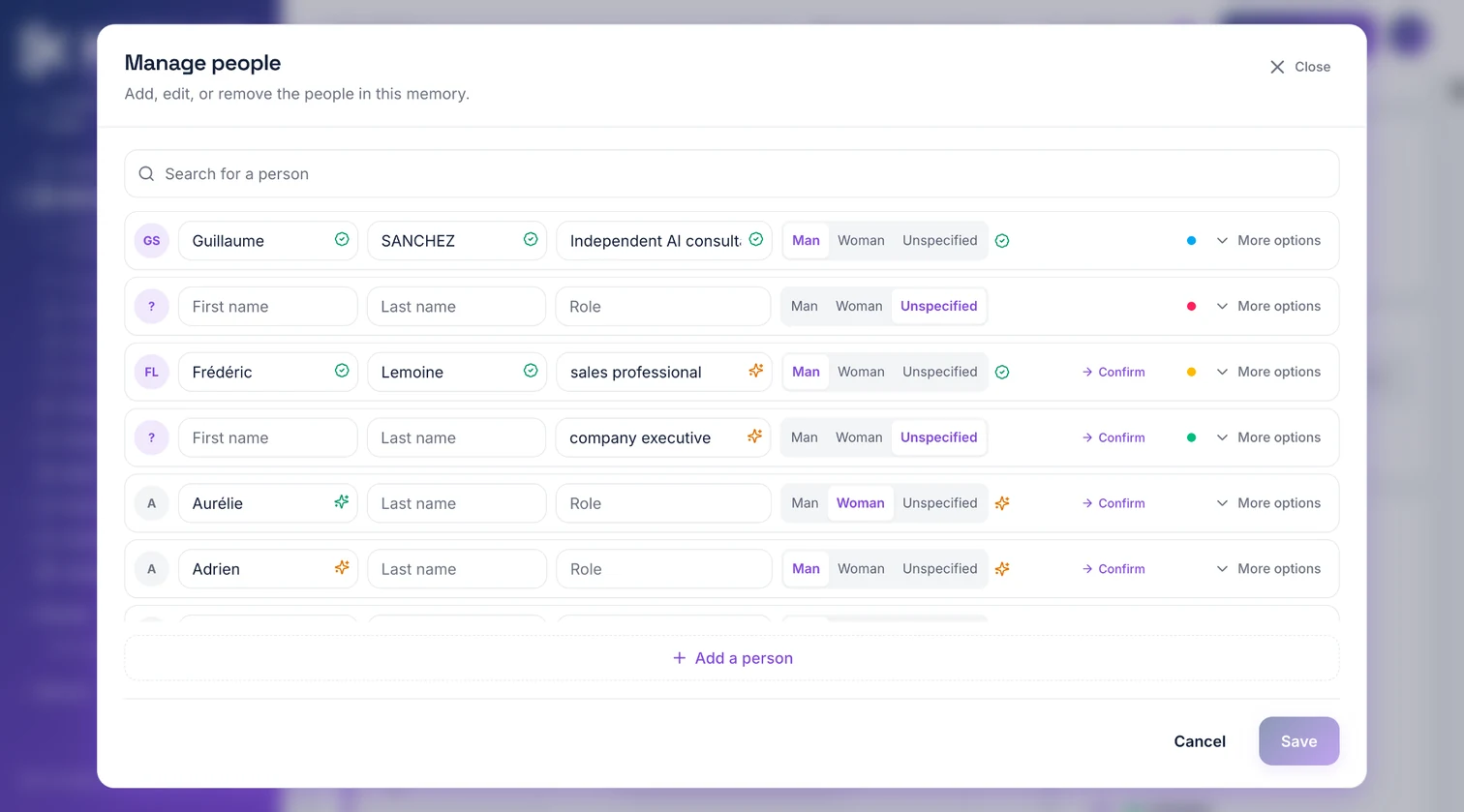
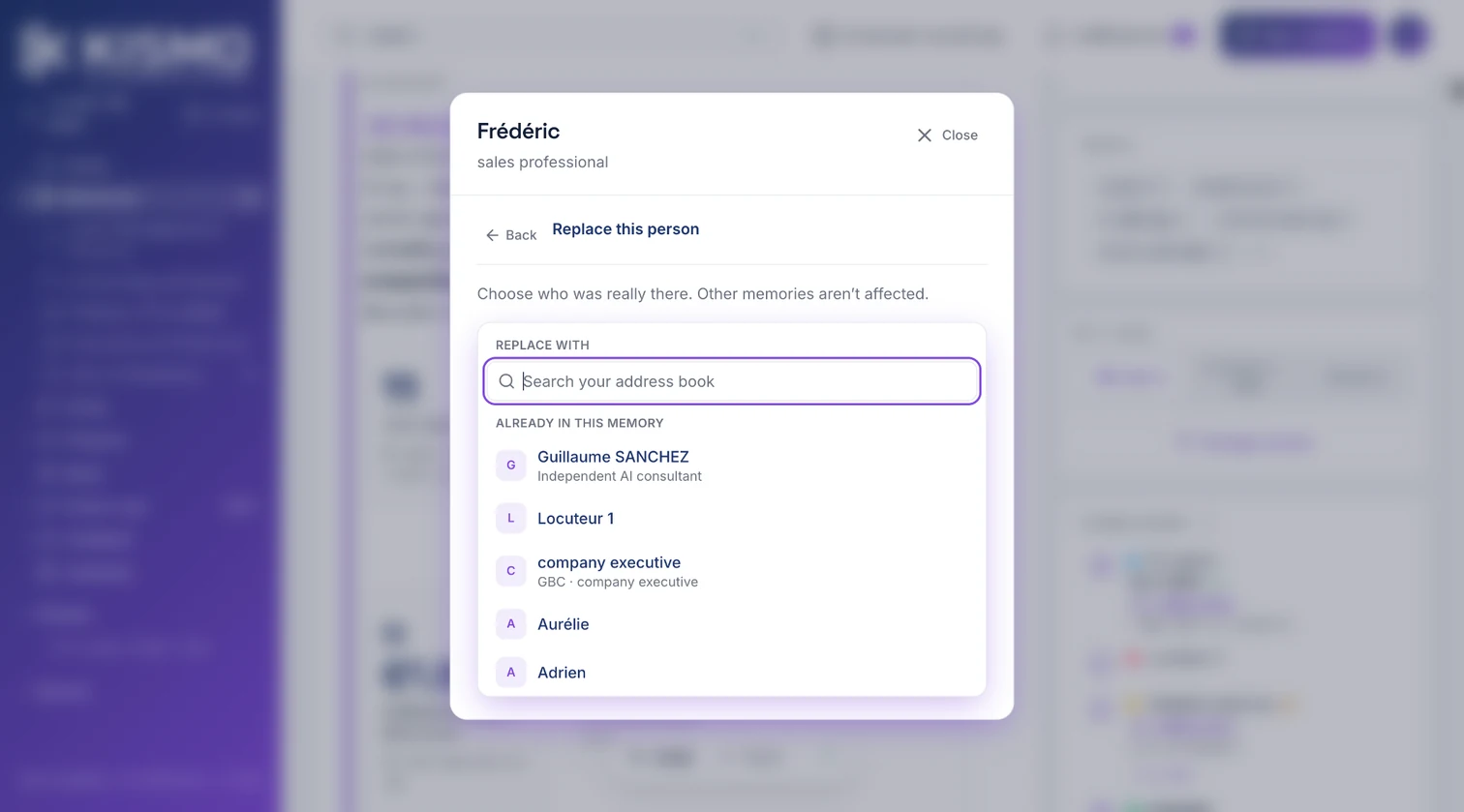
Every memory lists its participants and the people mentioned. You confirm uncertain identifications, add someone from the book, replace one person with another or swap two mixed-up attributions; the wording adjusts on its own. In the editor, the @ mention picks straight from the book.
A history that loses nothing
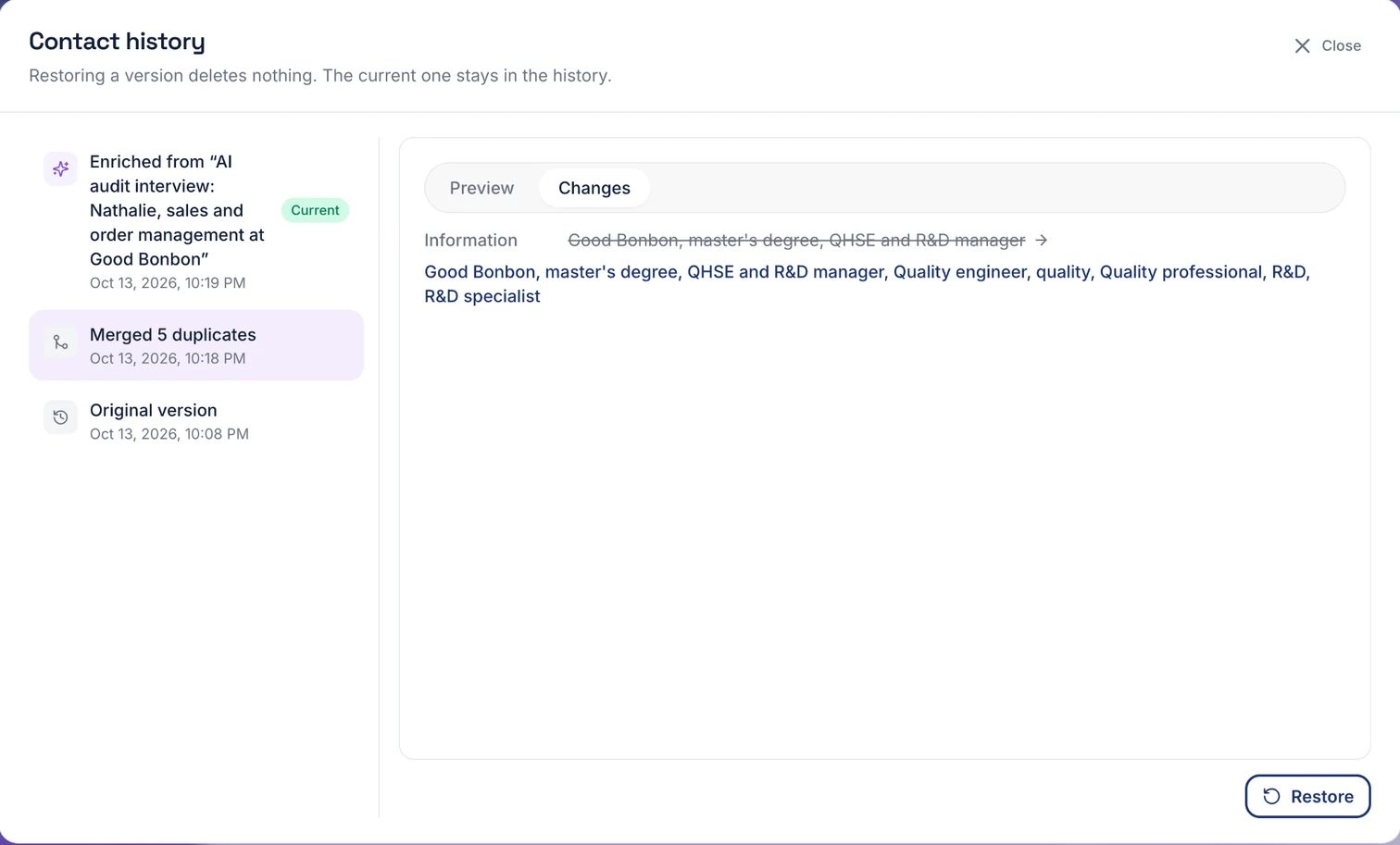
Each card keeps its versions: original state, merges, corrections. Restoring a version erases nothing, the current state stays in the history.
The book feeds the rest of KISMO: the assistant knows who's who when it answers (AI assistant), and cards follow your memories in the workspace.
The memory is the raw material. The Brain is what is left of it.
A memory keeps what was said, that day, intact. The Brain keeps what your company retained from it: what it knows, what it decided, what it has to do, what it is still wondering about. You review, you distill, nothing gets in without you.
Discover the Brain