
Complaints: tense exchanges, a clean record
An unhappy customer calls. Voices rise at times, grievances come one after another, and you have to calm things down, understand and keep an exact record, all at once. That's precisely when taking notes is hardest.
What KISMO does
KISMO recognizes a complaint and returns the exchange in a structured form: what the customer reports, in what terms, what they were told in response, what was agreed. The account follows the thread of the conversation instead of flattening it into a few lines. You have nothing to sort during the call: the structure comes afterwards, on its own.
The note then waits in your account, ready to be picked up, completed or passed on to the right department.
What you gain
The case is handled on facts, not on the memory of an unpleasant call. Your reply to the customer can pick up their own words, which changes the tone of what follows. If the case resurfaces months later, the history is already laid out: what was reported, what was promised. Conversations that begin with "nobody ever told me that" lose most of their fuel. And the person who absorbed the call isn't the one stuck writing up the minutes on top of it.
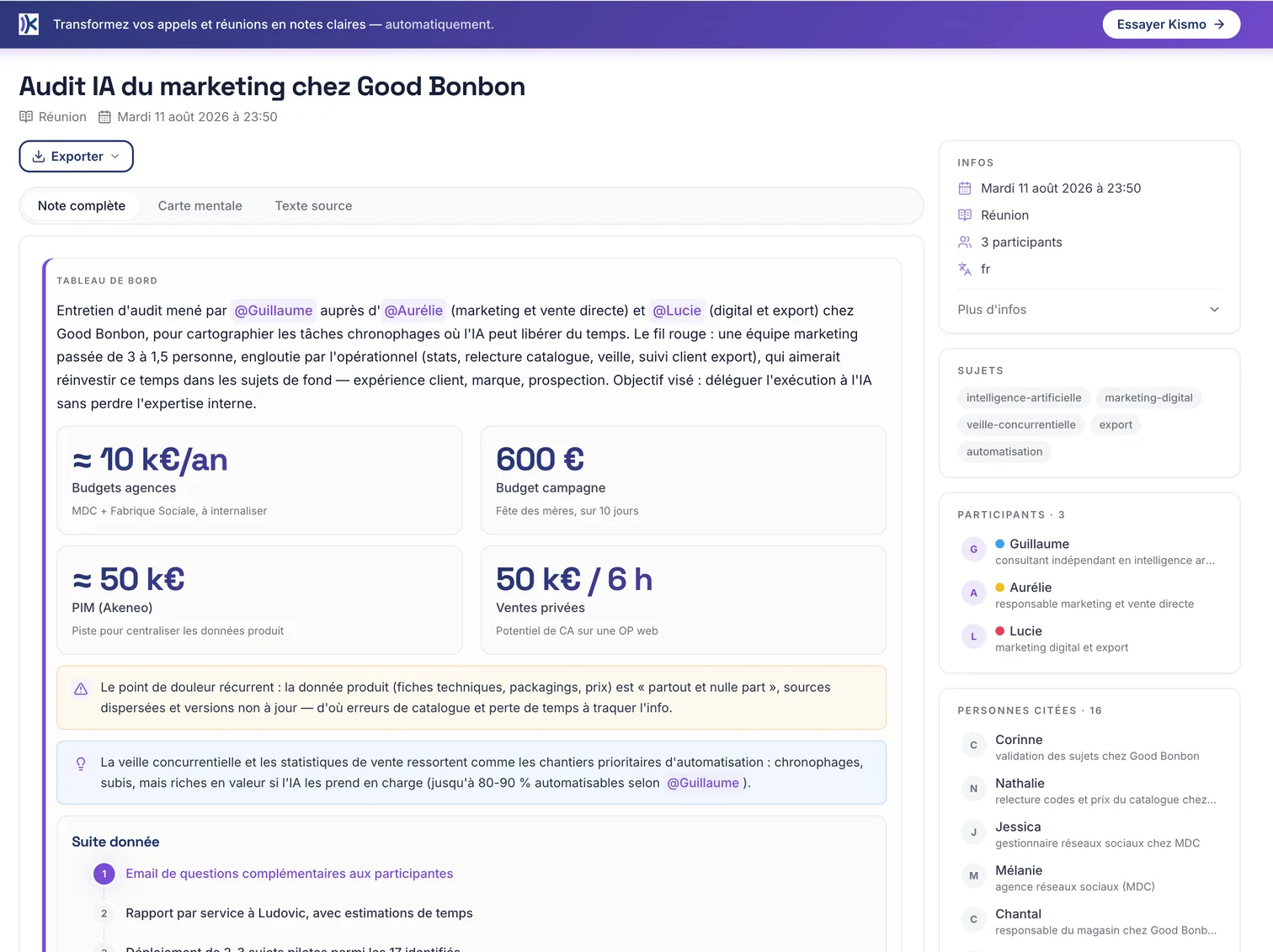
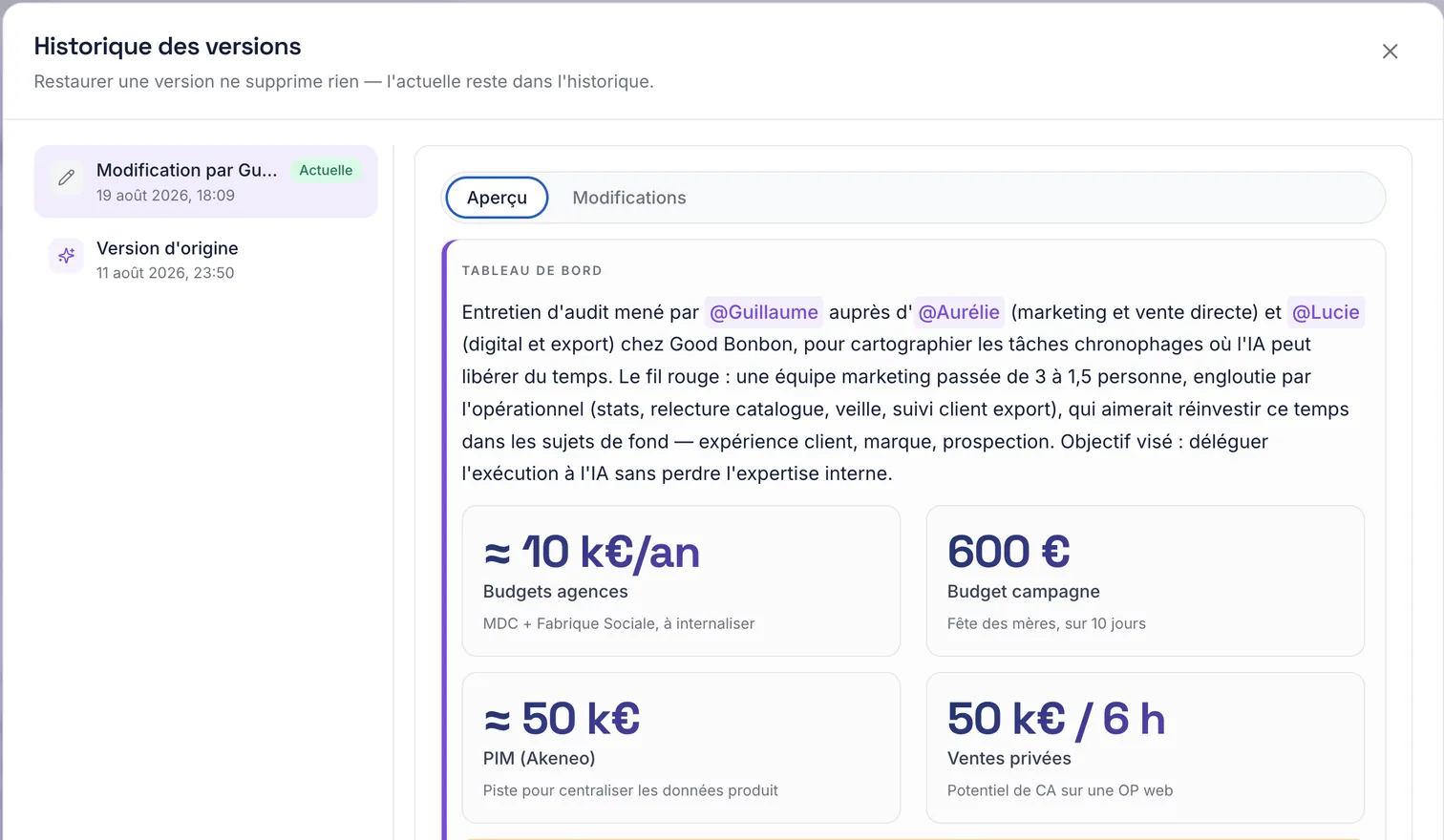
Image 1 / 3
Going further
What a note contains, its views and its exports: it's all on The note. Upstream of a complaint, there is often an ordinary call: see client and prospect calls.
What happens next?
Every note of this kind can be distilled, that is, reduced to what matters and kept current, so it joins your company's Brain. You validate what goes in, and you ask it a question later.
Discover the Brain