
A memory built note after note, that knows what is true today.
The Brain is what your company has retained from everything that has been said and written. You speak, you bring documents, you write: KISMO turns it into notes. Then it distills those notes, that is, it pulls out what matters and keeps it current: what you know, what you decided, what you have to do, what you are still wondering about. You validate what goes in. Then you ask a question, and it answers, telling you where it got the answer from.
It sorts everything into four things.
What we know, what we decided, what we have to do, what we are still wondering about. Grouped by subject, by client, by project. Connected.
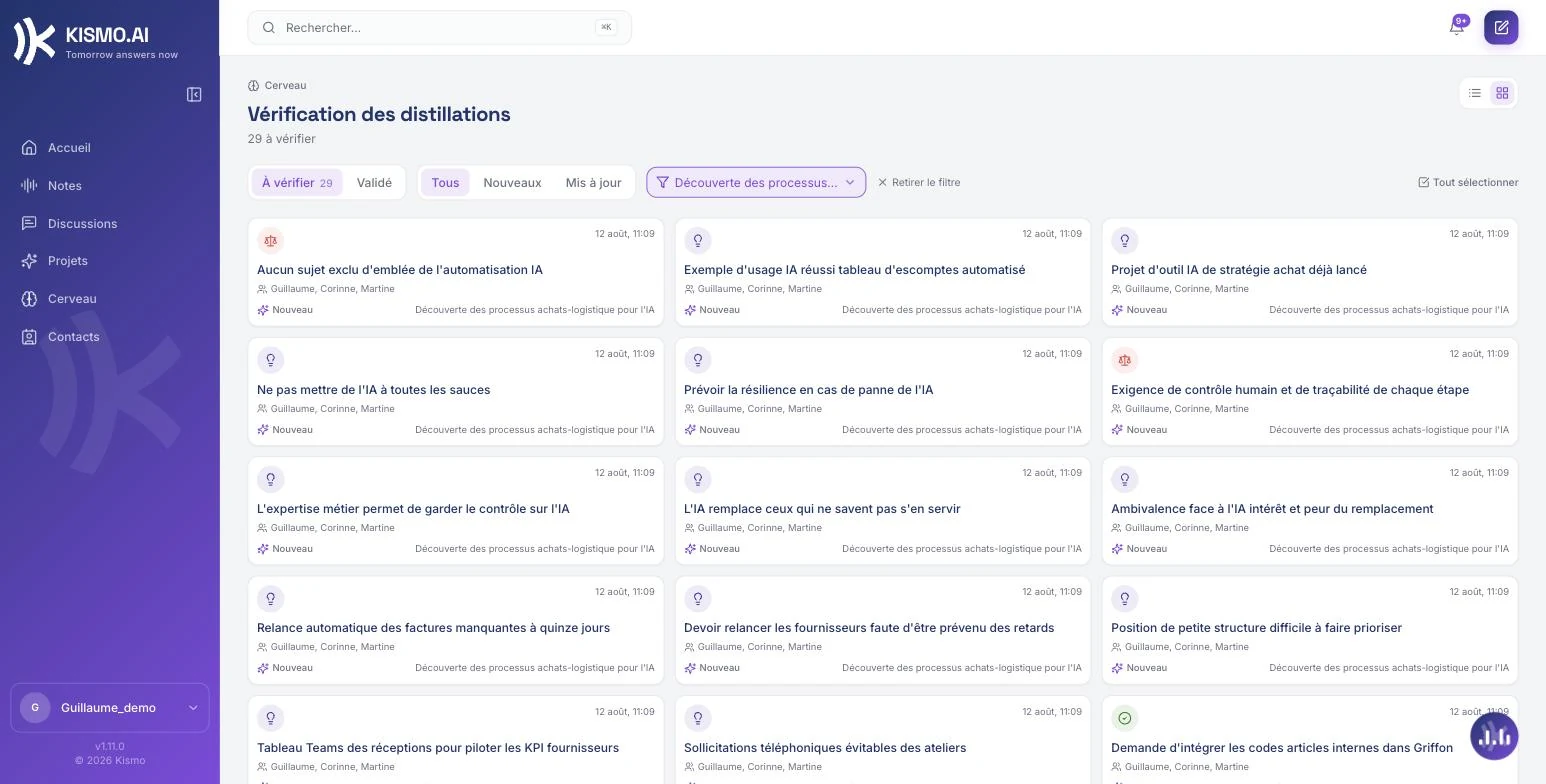
Nothing gets in unchecked.
Everything KISMO proposes goes through you: you accept, you correct, you refuse. Once it is validated, you are the one who made it official.
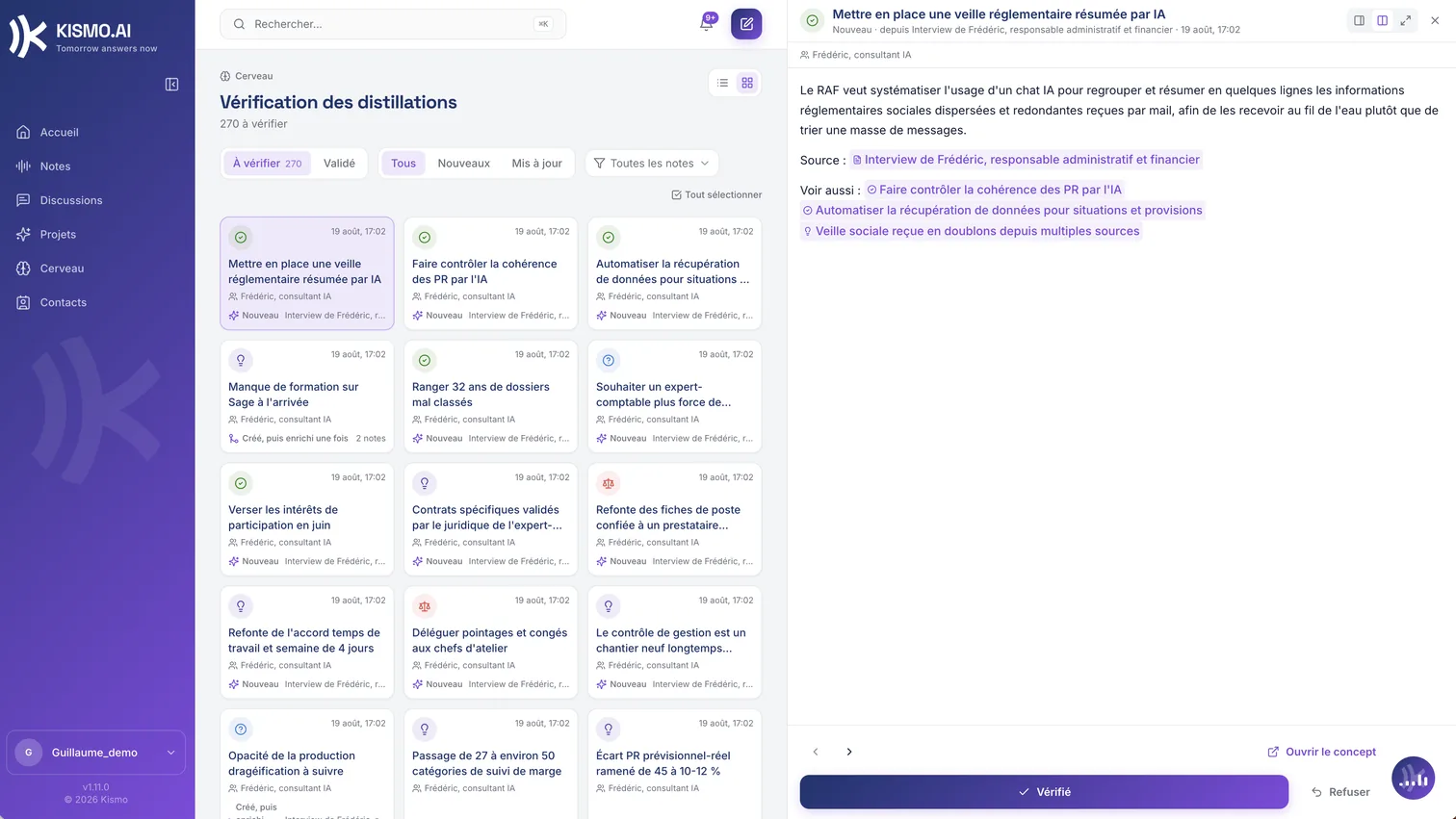
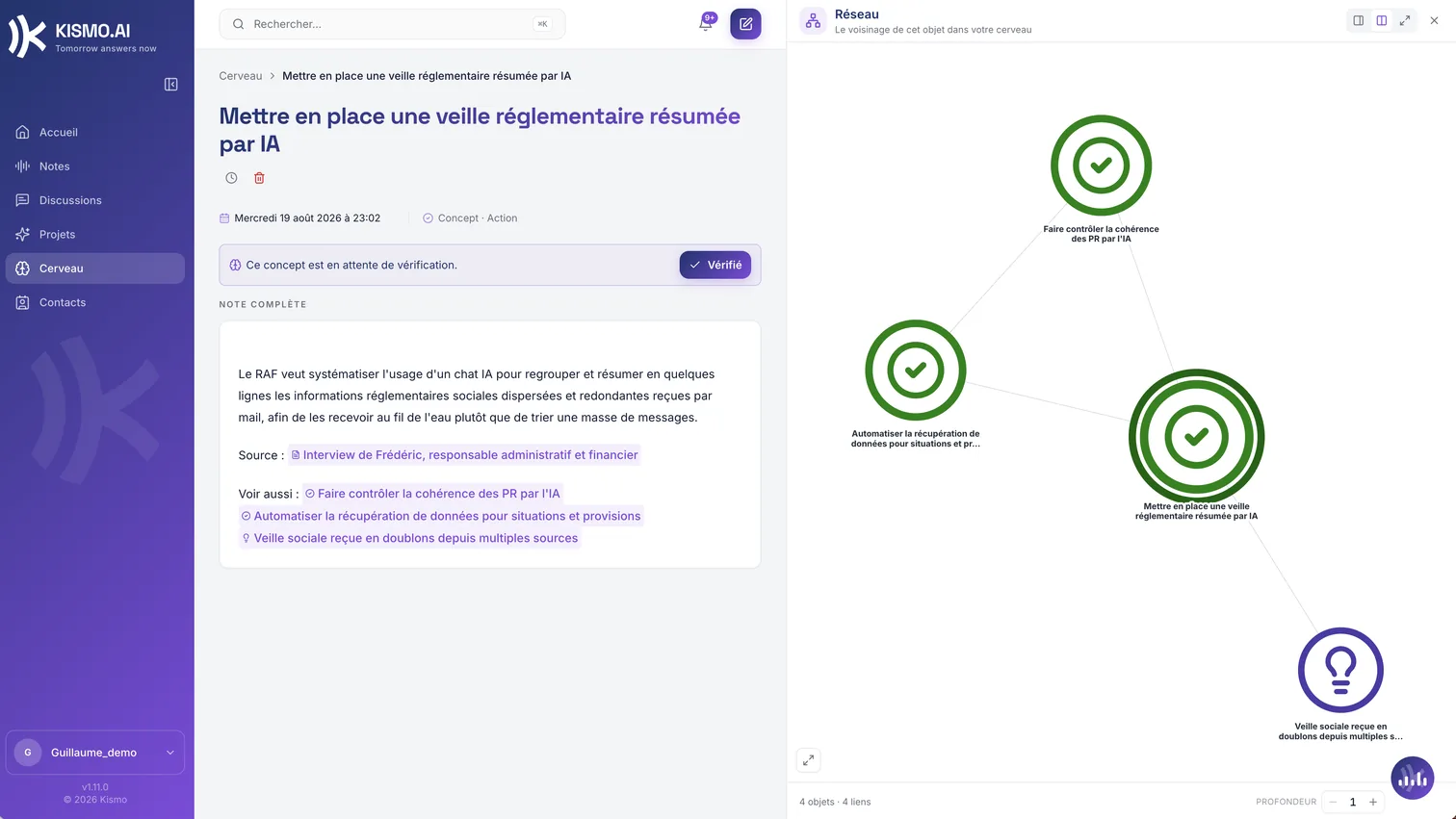
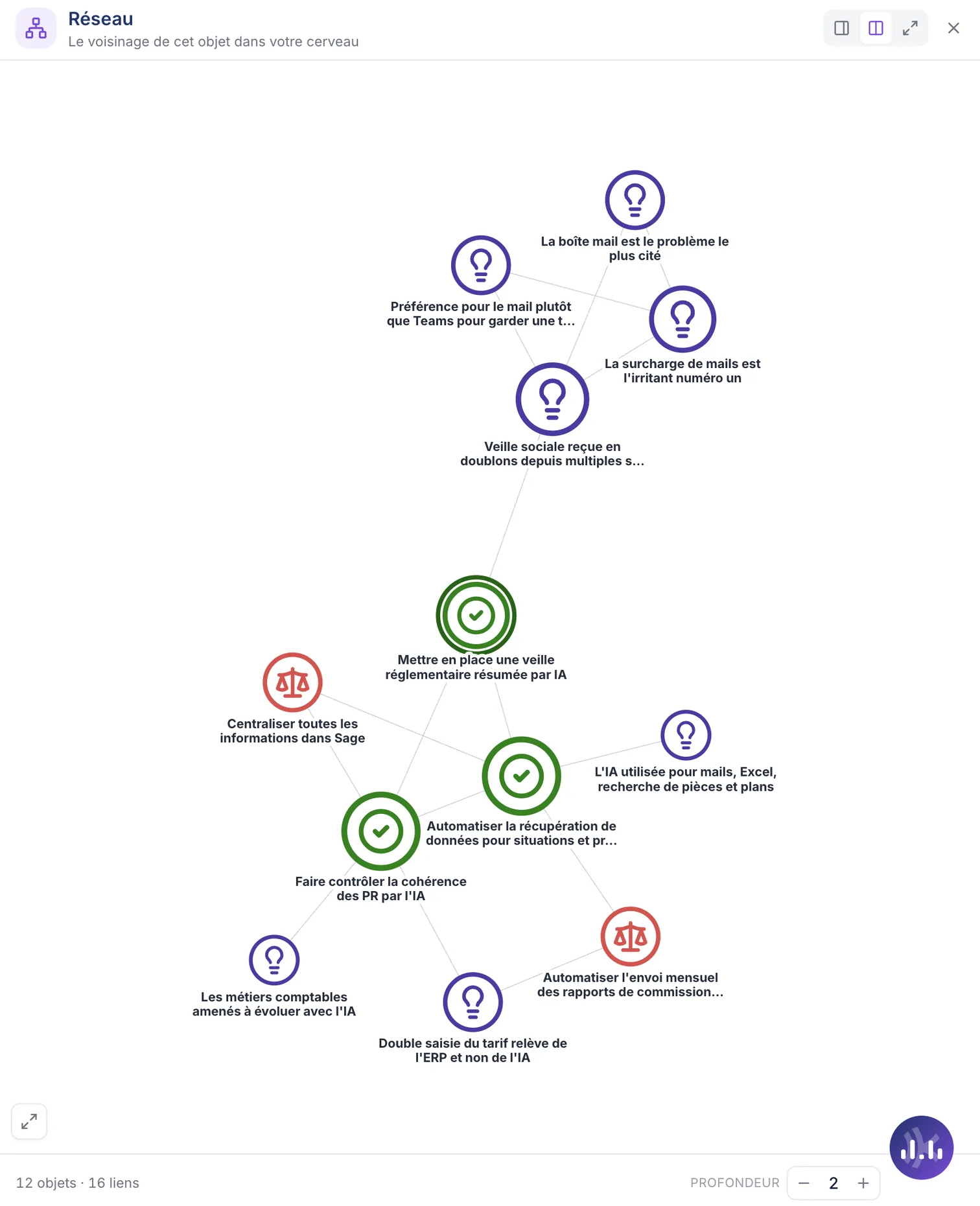
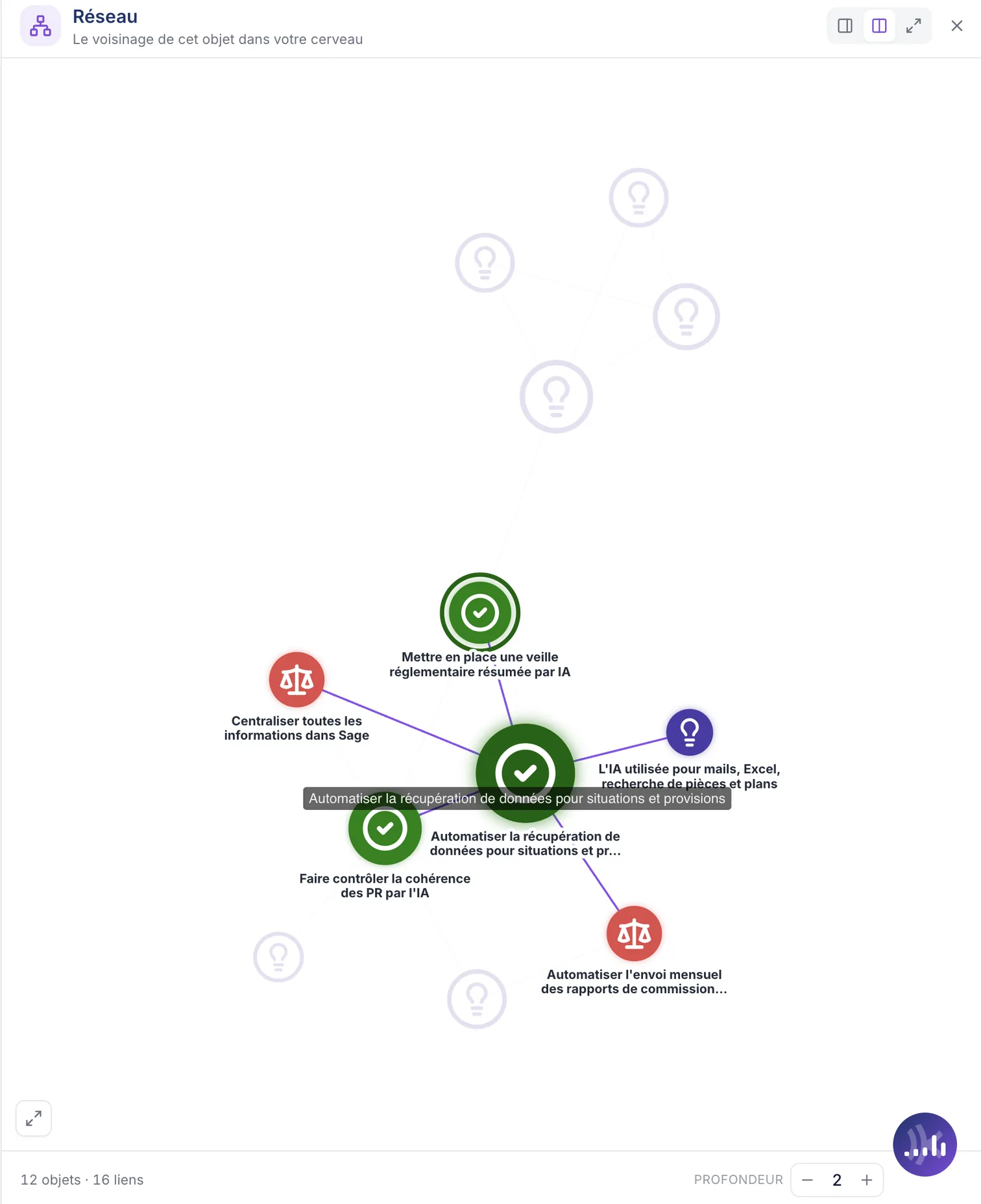
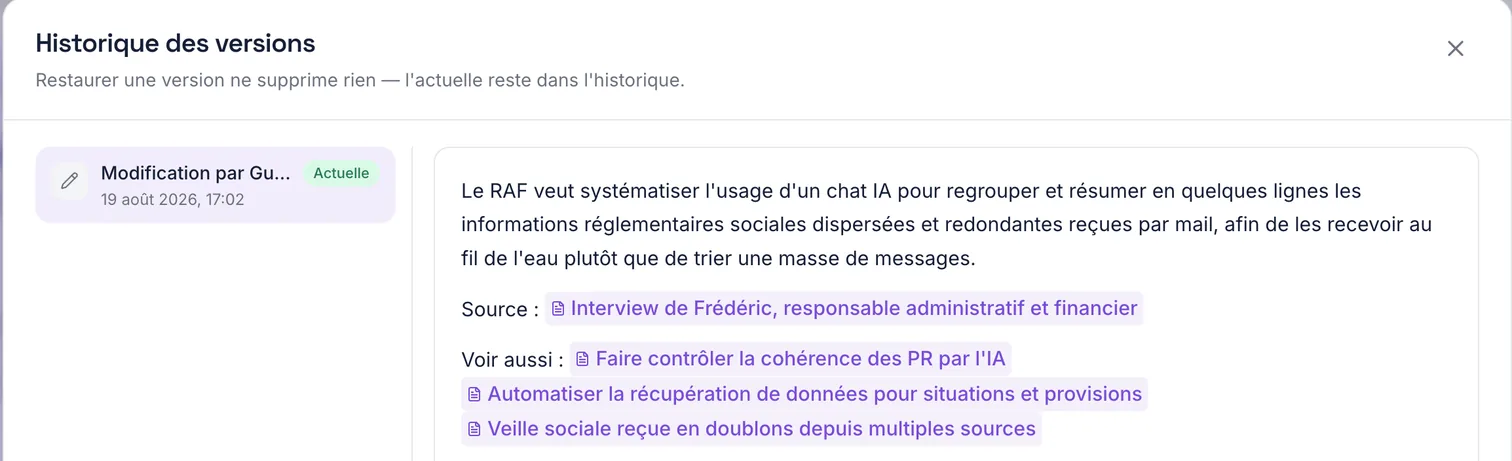
Image 1 / 5
It knows what is true today.
When a decision changes, the Brain does not keep two versions side by side: it knows which one is the latest, it shows you where it comes from, and it never serves outdated knowledge as if it were true.
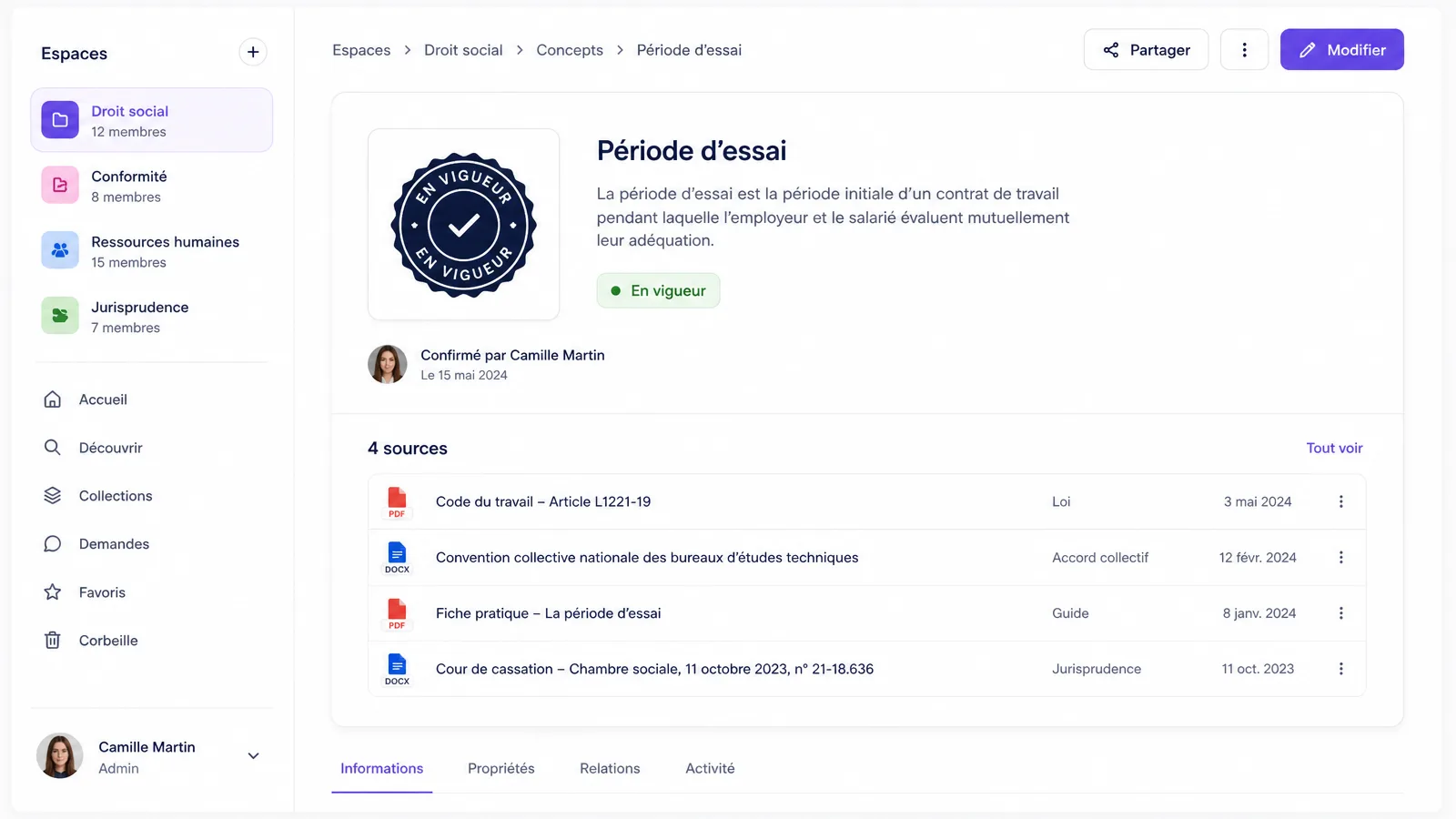
What comes back often weighs more.
Knowledge confirmed by the right people, found again across several meetings, gets anchored. What has been disputed weighs less until somebody settles it. What is no longer used fades, and KISMO asks before forgetting. A brain that knows how to forget.

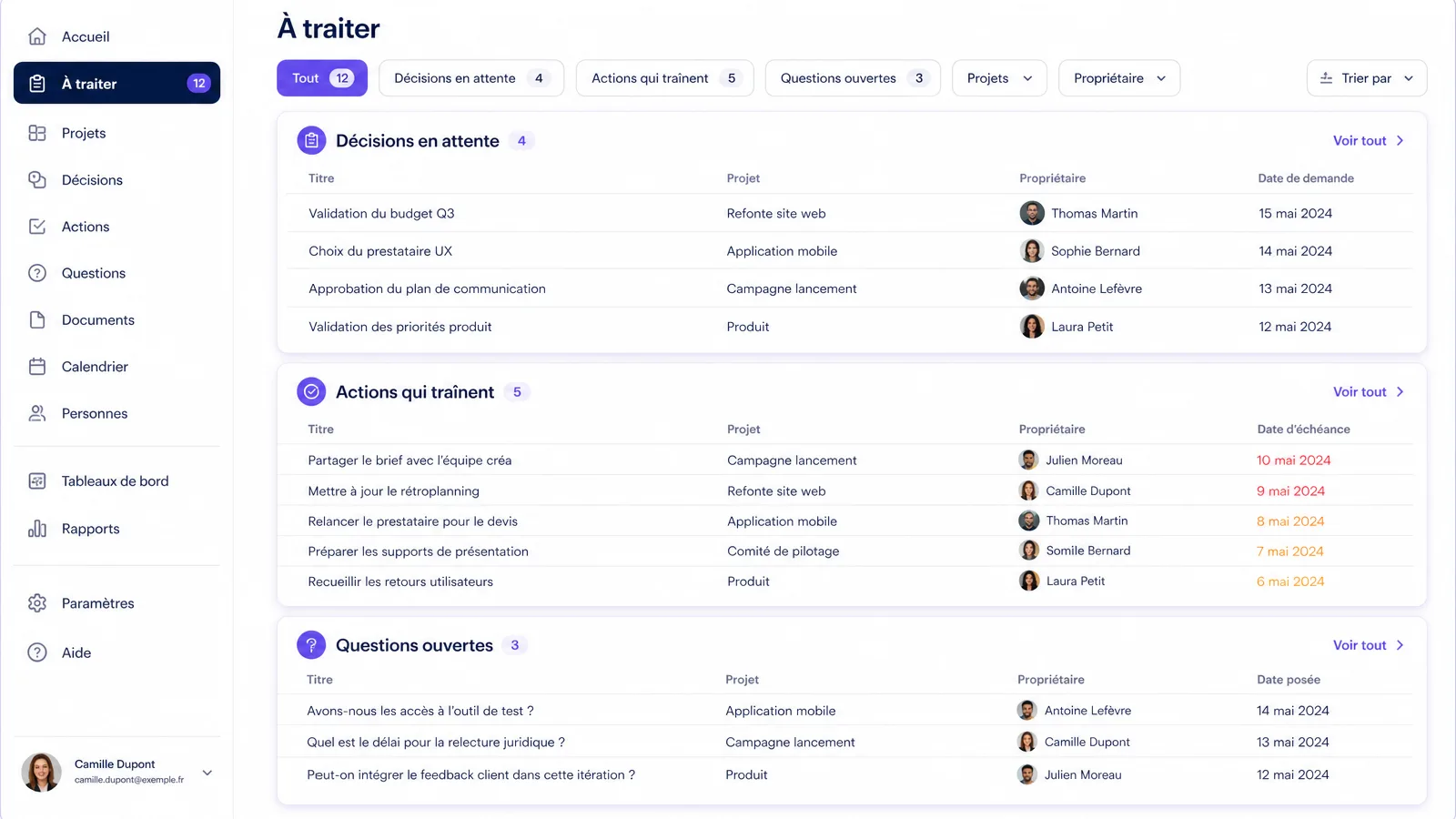
What is waiting on a decision from me?
The « To handle » view shows the decisions waiting, the actions dragging on, the open questions, with their age and where they came from.
A hard drive fills up. A brain learns.
This is not one more folder of notes. It is not a box where you throw documents to search them later. It is what your notes taught you, updated with every new conversation, and validated by you. Not a second brain. Your company's first brain.
One brain, with zones.
Everyone has their own space, each team and the company have theirs, and knowledge moves up when the right people have confirmed it. The full model is on Spaces. For the wider picture, read Company knowledge.
Estimate what forgetting costs your company
Enter your own numbers, get a detailed yearly estimate, then download the report or receive it by email.